December started with abundant rainfall and low-altitude snowfalls, but Italy is preparing for a drastic change in the weather scenario.
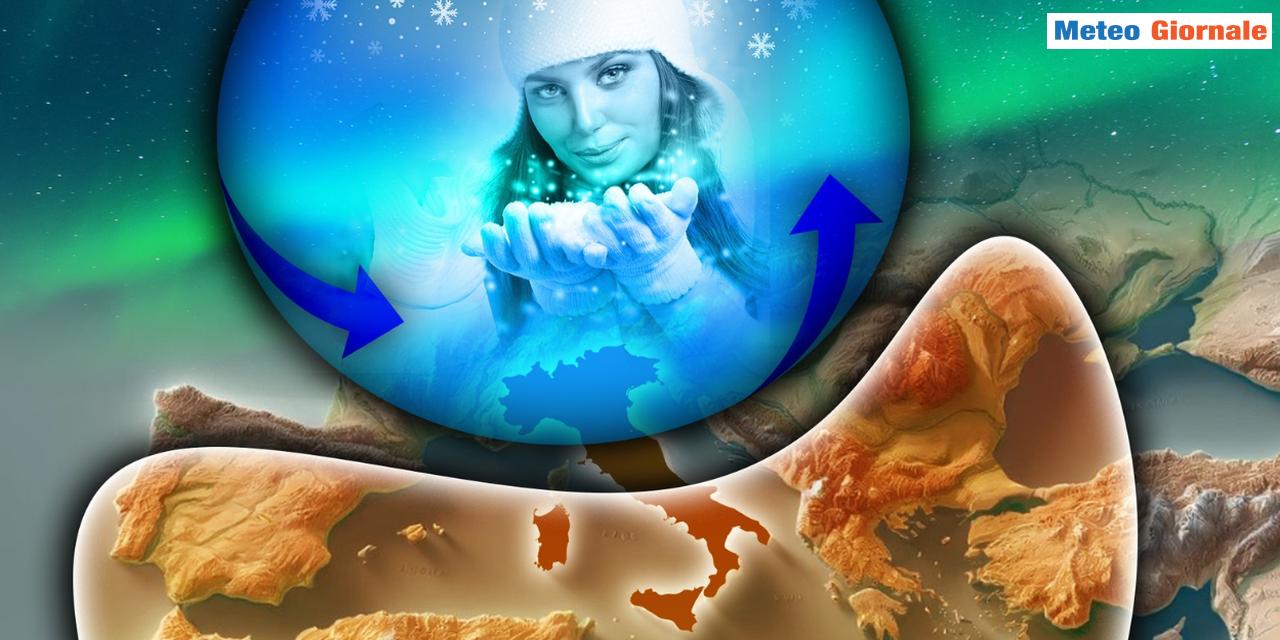
Next week, and particularly from Tuesday 17th, a vast African Anticyclone will expand over central-western Europe, bringing a mass of warm air that will radically change the climate.
Atmospheric stability and mild temperatures
The High Pressure will act as a block for Atlantic disturbances and polar cold air intrusions.
This configuration will bring a period of atmospheric stability across the entire national territory.
Temperatures will rise, exceeding seasonal averages, especially in the Alps and in the regions of Central and Southern Italy. The atmospheric stability will be accompanied by an almost total absence of precipitation, but it will not be without side effects. In many areas of Northern Italy, persistent fog will form, which will be one of the most significant aspects of the weather picture.
Fog and air quality: a growing problem
The plains of Northern Italy will be particularly affected by fog, which will significantly reduce visibility during the evening and morning hours.
The most affected regions will be Lombardy, Emilia Romagna, Veneto, and Friuli Venezia Giulia.
Low visibility conditions could negatively impact traffic and transportation. A similar phenomenon can also be observed along the coasts, particularly in Liguria, where it is commonly called “Maccaja,” and in Upper Tuscany.
This maritime fog is caused by the flow of warm and humid air over colder marine surfaces, typical of Winter. Temperatures in areas subject to fog will generally be lower than in other parts of the country, with values that will hardly exceed 41°F-46°F, despite the general atmospheric warming. Moreover, the stagnation of air in urban and industrial areas will lead to a significant increase in pollution, worsening air quality.
The thermal values we will reach
The High Pressure will dominate the weather for the entire next week, ensuring a mild and dry climate over much of Italy.
The northern regions, particularly the plains, will instead experience more humid and cold conditions due to persistent fog. Maximum temperatures could reach values of 59°F-64°F in the regions of Central and Southern Italy, with higher peaks in hilly areas.
However, in areas affected by fog, temperatures will remain much more contained, creating a marked thermal contrast between different parts of the country.
Possible changes around Christmas, but to be taken with due caution
Despite the current dominance of the Anticyclone, long-term forecasts indicate a potential significant change around the Christmas holidays.
The arrival of a mass of cold air from the North Pole could interrupt the stable phase, bringing back typical winter conditions. This change could result in abundant precipitation and snowfalls down to low altitudes.
Mountain regions, particularly the Alps and the Apennines, could see significant accumulations, while the plains of Northern Italy and some areas of the Center could experience sporadic snowfalls. In the South and on the Major Islands, however, an intensification of rains is expected, with the possibility of localized thunderstorms.
Although projections need further confirmation, this scenario could represent the return of winter cold, in stark contrast to the currently mild temperatures.
Dire consequences!
The African Anticyclone that will characterize the next week will have varying effects on the national territory.
In mountain regions, the partial melting of recent snowfalls could create hydrogeological risks, such as landslides and mudslides, due to the increase in temperatures.
In the plains, the accumulation of humidity will lead to the formation of ice during nighttime hours, increasing dangers for traffic. At the same time, the stagnation of air could exacerbate health problems related to air pollution, especially in large cities like Milan, Turin, and Bologna.
Local authorities will be called to manage this emergency with containment measures, such as the temporary blocking of vehicular traffic. The coasts of Central and Southern Italy, on the other hand, could benefit from mild temperatures regarding winter tourism, with an increase in visitors to seaside resorts.
Big maneuvers after December 21-22!
If the meteorological change were to materialize around Christmas, typical Winter climatic conditions would return to dominate the Italian landscape.
Temperatures could drop sharply, with minimum values below freezing in many areas of Northern and Central Italy.
Snowfalls are expected even at low altitudes. Conversely, the coastal areas of Southern Italy and the Major Islands will be more affected by rainy disturbances, with locally intense phenomena. In particular, Sicily and Calabria could face violent thunderstorms, with rainfall accumulations exceeding 2 inches in a few hours.
In short, a fluctuating period!
In light of the forecasts, it will be important to monitor the weather evolution in the coming days.
The African High Pressure will ensure a stable and dry climate for a limited period, but the Christmas holidays could bring a return of winter conditions. This scenario highlights the complexity of Winter weather dynamics, characterized by alternations between mild phases and sudden returns of cold.
 Follow our feed