The freeze returns to the forefront in Europe with a significant drop in temperatures in this early-year weather scenario.
After a mild phase following Christmas, the climate has undergone a drastic change, with a sharp cooling that has begun to affect the northern and eastern nations of the Continent.
What will happen in the coming days?
The icy air will advance decisively, progressively conquering parts of the central nations of the Continent and Eastern Europe.
At the 850 hPa level, temperatures are expected to drop sharply, with isotherms reaching values between 10°F and 3°F widespread, down to -4°F or more in the northern areas of Scandinavia.
These values indicate intense and unusual cold. In these areas, temperatures will drop well below the seasonal average.
After recording up to 54°F above average between Boxing Day and December 27, average values will drop to 21°F-18°F below normal, with peaks down to 10°F, especially between Scandinavia and the Balkans.
Will the freeze continue?
The cold will stabilize in the mentioned areas, with a decidedly winter climate that will persist.
Even in Central Europe, the freeze will be accompanied by possible heavy precipitation.
Here, the contrast between cold currents and the Atlantic flow will give rise to a cold and disturbed period.
There may be conditions favorable for snow down to the plains, but attention must also be paid to the possible and insidious phenomenon of freezing rain, which is nothing but rain that freezes upon contact with the ground.
And in Italy?
The weather situation for Italy is still uncertain.
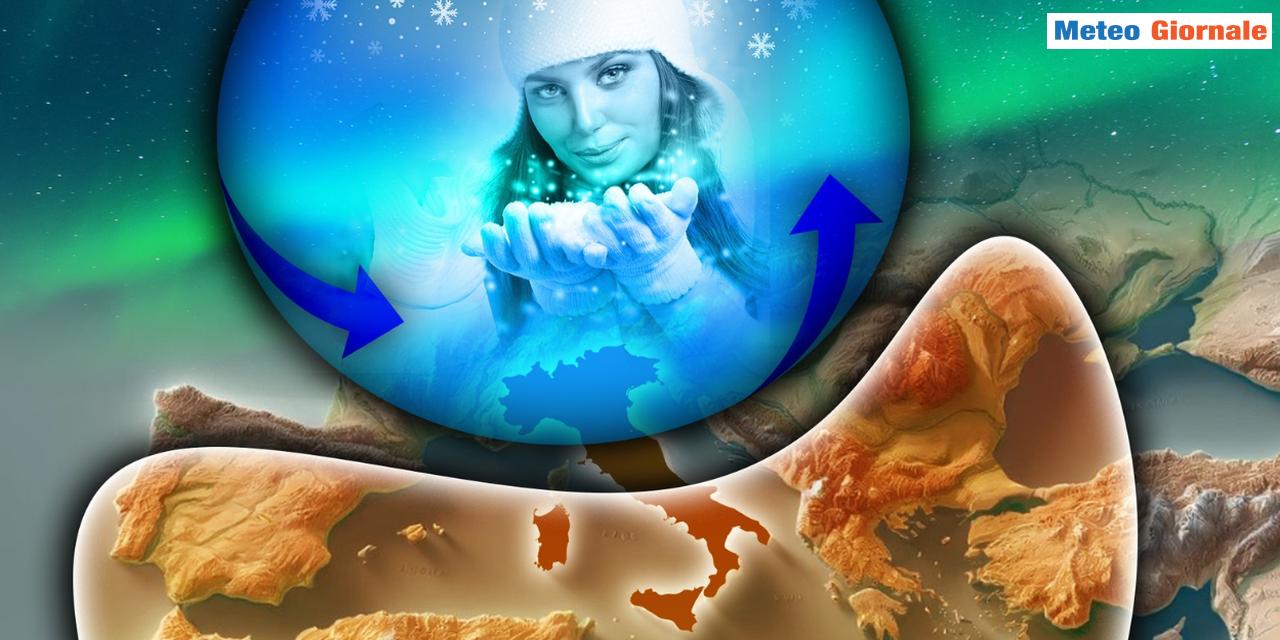
Only after January 8-9 could we see the entry of cold air coming from both Northern Europe and the Balkans, with a winter phase characterized by intense bad weather and significantly below-average temperatures.
However, due to the natural protection offered by the Alps, the cold air requires particular atmospheric configurations to reach our Peninsula.
 Follow our feed