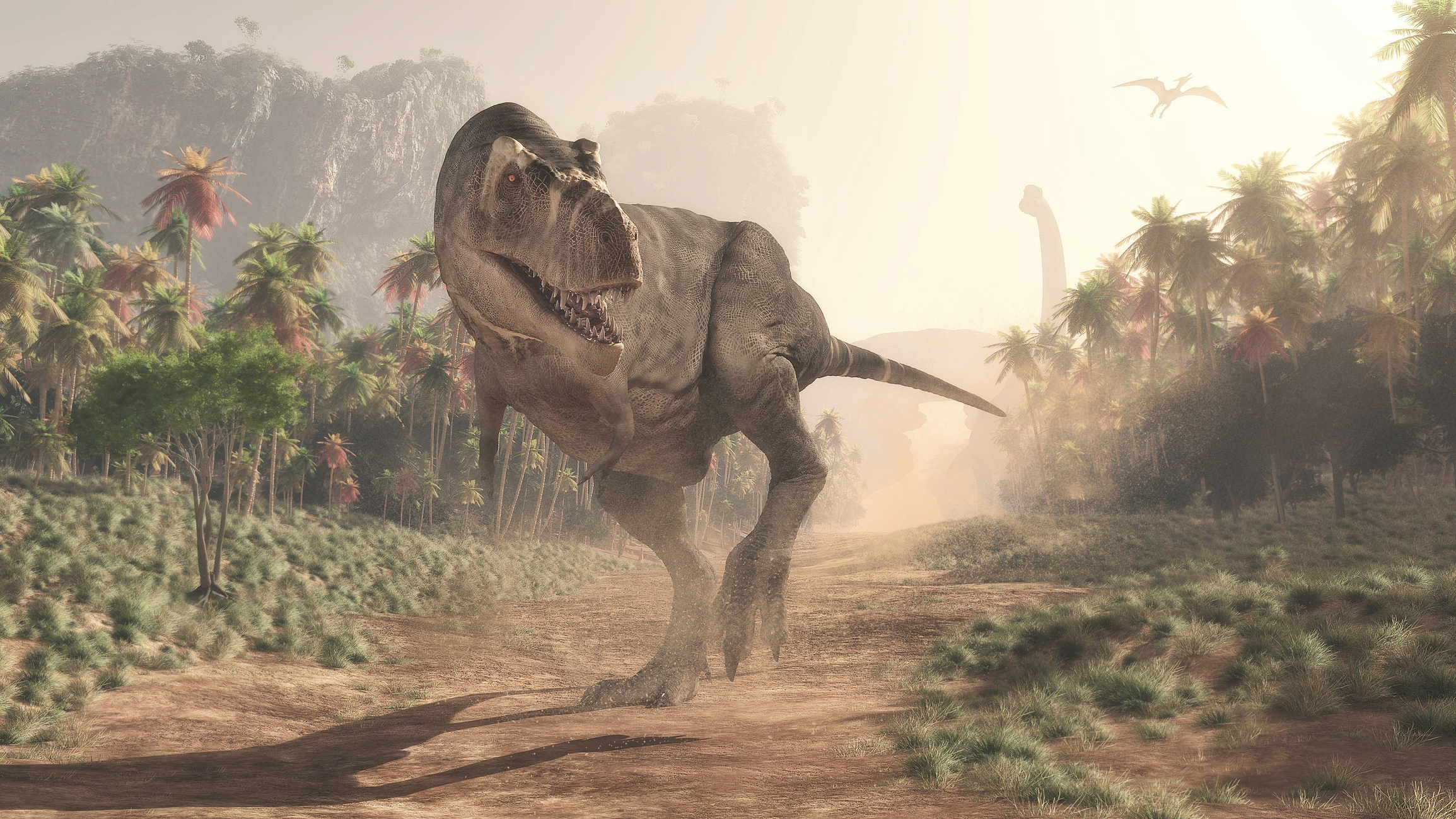
 A surprising discovery has occurred in an unexpected place: a drawer at the Museo del Desierto in Saltillo, Mexico, has revealed the remains of a new species of tyrannosaur, named Labocania aguillonae.
These fossils were collected back in 2000 by paleontologist Martha Carolina Aguillón, but only recently have further studies revealed that they were not just insignificant fragments, but rather a completely unknown species of tyrannosaur. Typically, tyrannosaurs are associated with the north of the North American continent, with the most well-known species coming from Canada and Montana.
However, in recent decades, some species of tyrannosaurs have also been identified in more southern regions.
Important discoveries such as Teratophoneus curriei in Utah in 2011 and Bistahieversor sealeyi in New Mexico in 2010 have expanded the knowledge of the distribution of these predators. However, the further south you go, the rarer the findings of tyrannosaurs become, and Mexico has provided few specimens.
Until now, the only species described in this country was Labocania anomala, discovered in 1974.
The recent identification of Labocania aguillonae therefore marks an important milestone for Mexican paleontology, as it expands the understanding of the geographical distribution of these ancient predators. Labocania aguillonae appears to have physical characteristics similar to those of the famous Tyrannosaurus Rex, but with some significant differences.
This new dinosaur has a lighter and more agile structure, with long legs and large eyes, features that suggest a possibly faster movement ability.
Its close relationship with other southern tyrannosaurids, such as L. anomala and B. sealeyi, offers new insights into the evolution and spread of these carnivores. The discovery not only enriches the catalog of known species but also indicates a greater diversity and a wider distribution of tyrannosaurids than previously thought. Nick Longrich, from the University of Bath and co-author of the study published in Fossil Studies, emphasized how southern tyrannosaurids have unique characteristics, distinguishable from those of their northern relatives, especially in the shape of the skull and the proportions of the limbs. Longrich also highlighted how much remains to be discovered in Mexico regarding these ancient predators. “There is much more [in Mexico] than we realize,” he said, implying that many more discoveries could be waiting beneath the Mexican soil. Labocania aguillonae represents just the beginning of a deeper exploration of paleontology in the region.
Our articles from Meteo Giornale are on Google News, follow us for free!
 Follow our feed