POSSIBLE WEATHER EVOLUTION IN 15 DAYS We have left behind a hot weekend, at times muggy, in short, the usual weekend dominated by evidently subtropical weather conditions.
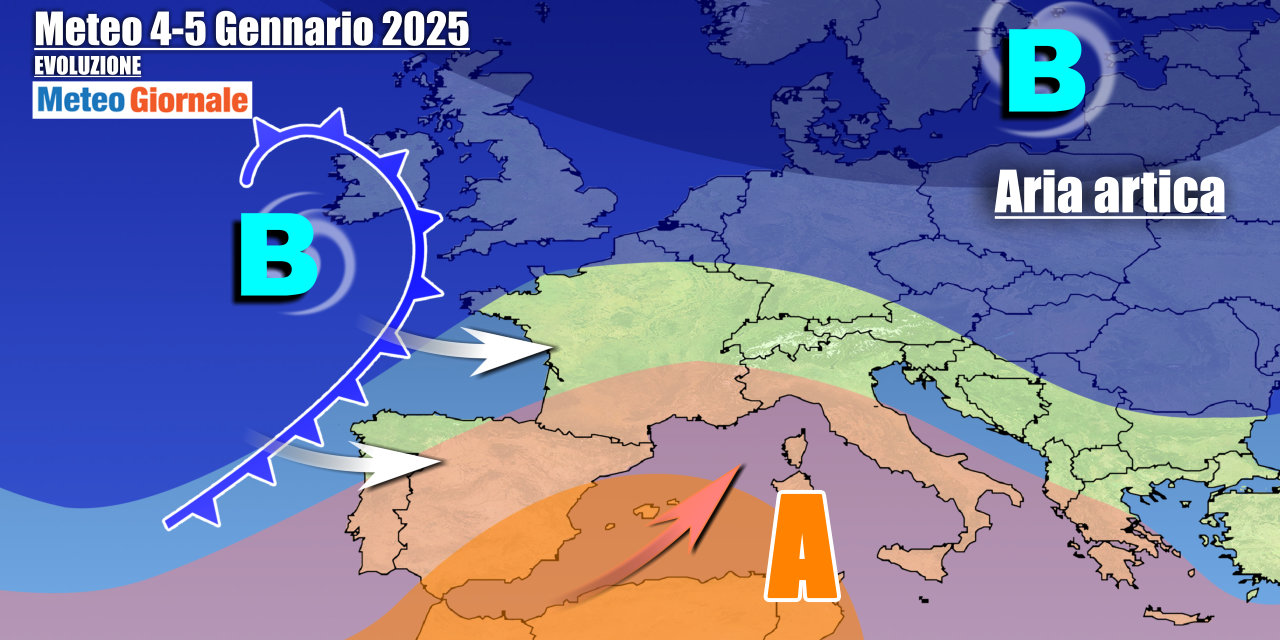
High Pressure continues to dominate the Mediterranean scene, but as already highlighted by colleagues, something will change in the coming hours.
Some small structural cracks will allow mild oceanic air to infiltrate the Mediterranean, which will obviously destabilize the atmosphere, triggering new intense thunderstorms.
Thunderstorms that, yes, will mostly involve areas near the mountain ranges but could locally occur even on plains and coastal areas.
In many cases, these incursions could be totally unpredictable.
But the most significant changes could occur in the first days of September, when – according to the latest model updates – cool air from the east could trigger a real deterioration following the isolation of a large cold drop at high altitude. SHORT-TERM WEATHER In the coming days, let’s say for most of the week, even without substantial changes – the Anticyclone is not expected to weaken – thunderstorms will not be lacking.
Attention, because these will be locally quite violent thunderstorms.
For example, on the Alpine arc and in the Northwest, where we also expect incursions into the plains.
They could be locally violent along the Apennine ridge and in the inland areas of the two Major Islands.
Then, another element to consider, we will have a contraction of temperatures.
Nothing sensational, to be clear, but let’s say a return to values more consistent with the period. TOWARDS AUTUMN It seems that with September some things could change.
What was described at the beginning, namely the intrusion of the cold drop, could lead the Anticyclone to move west – towards the Azores – and from there point north. At that point, the oceanic cyclonic action could extend southwards, causing further deteriorations into the heart of the Mediterranean. IN CONCLUSION If this last hypothesis proves correct, Autumn would already strike a first hard blow and the beautiful season would go into crisis.
Heavily. Remember that weather forecasts are more reliable up to 5 days, while their accuracy decreases as the forecast period increases.
 Follow our feed