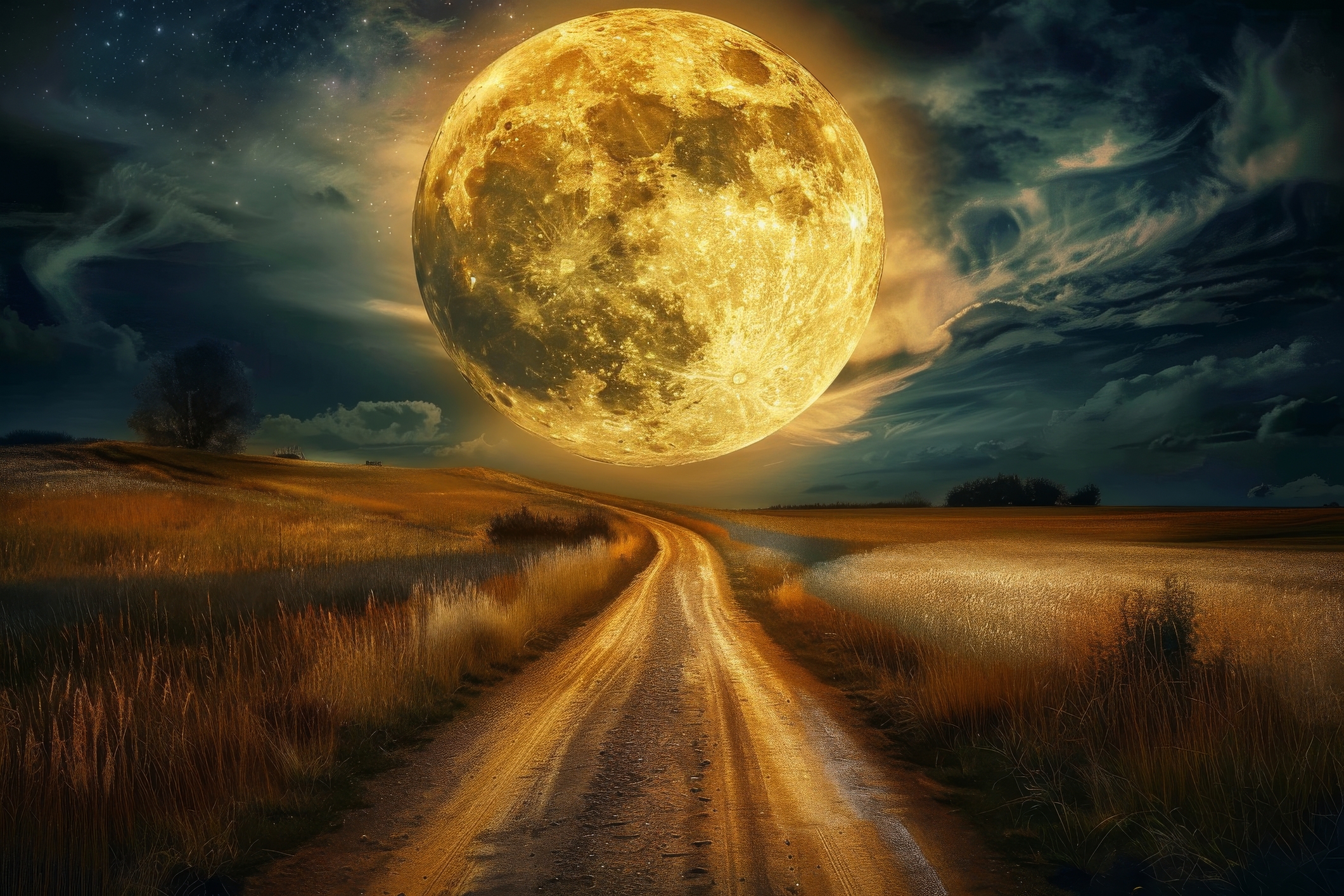
 This weekend, the night sky will be illuminated by the last full moon of 2024.
This celestial event will take place the next night, between Saturday, December 14 and Sunday, December 15, with the moon rising on the eastern horizon and remaining visible until dawn.
The December full moon, also known as the Cold Moon, will emerge in the constellation Taurus, positioning itself near the horns of this zodiac sign and adjacent to the constellation Auriga.
During this special night, the planet Jupiter will shine brightly nearby. Another celestial spectacle coinciding with the full moon is the Geminid meteor shower, which peaked on the night of December 13.
Despite the brightness of the moon potentially hindering the visibility of less luminous meteors, astronomy enthusiasts will still be able to observe some “shooting stars” armed with patience and dressed appropriately for the low temperatures. The exact moment when the moon will reach its full phase will occur at 10:02 AM (Italian time) on December 15. In addition to Jupiter, other celestial bodies will accompany the December Cold Moon; Venus will shine brightly in the southwest as the “evening star,” while Saturn will be evident in the constellation Aquarius several hours after the Moon rises. Mars will make its appearance a few hours after the moonrise above Gemini. The name “Cold Moon” derives from the long and cold nights typical of the last month of the year in our hemisphere.
 Follow our feed