Friday, 15 May 2026
Meteo Giornale English
  • Home
    • Italiano
    • Español
    • Français
    • Deutsch
  • Weather Forecast
    • Weather Forecast 7 days
    • Weather Forecast 15 days
  • Climate change
  • Weather Forecast Editorial
    • Weather Focus
    • Weather News
    • Wiky Weather
  • Magazine
  • Multimedia
  • Travel and Climate
  • Home
    • Italiano
    • Español
    • Français
    • Deutsch
  • Weather Forecast
    • Weather Forecast 7 days
    • Weather Forecast 15 days
  • Climate change
  • Weather Forecast Editorial
    • Weather Focus
    • Weather News
    • Wiky Weather
  • Magazine
  • Multimedia
  • Travel and Climate
Meteo Giornale
Página de inicio Magazine

Sure, here is the translation: “How machine learning accelerates our ability to explore the universe

William Brown por William Brown
Sep 15 2024 - 12:06
en Magazine
Tiempo de lectura: 2 mins de lectura
A A
Share on FacebookShare on Twitter

READ ALSO

The growing threat of microplastics: concerns about correlations with certain diseases

Submarine volcano off the coast of the United States to erupt in 2025? The forecasting challenge


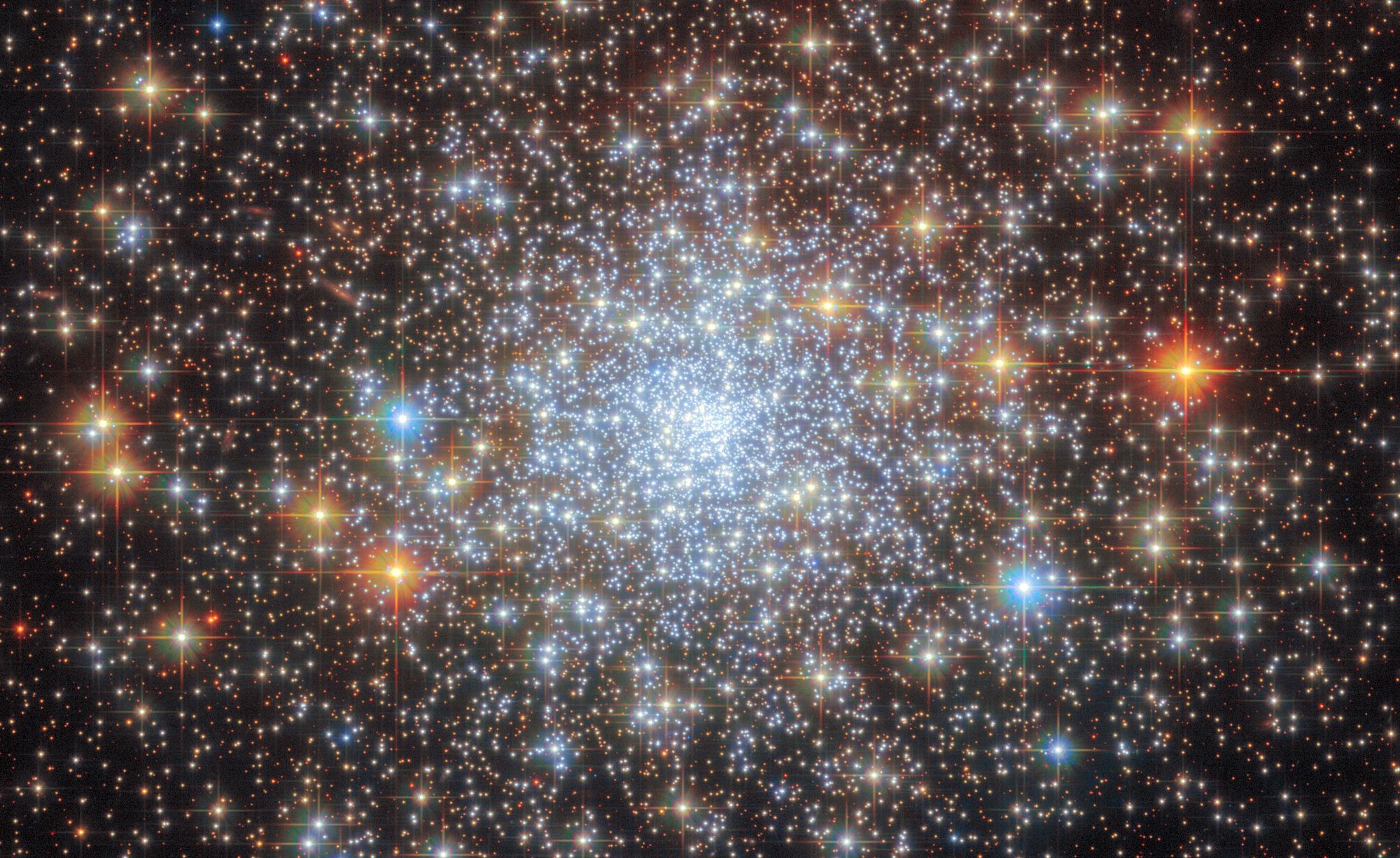
Credit: ESA/Hubble & NASA, ⁣A.

Sarajedini, ​G. ⁢Piotto

The image captured by NASA/ESA’s Hubble Space Telescope shows the globular star cluster⁢ NGC 6652.

If we embarked on a journey through the‌ various ⁣eras of astronomy, we would start with the ancients who wondered why some “fixed lights” populated the night sky.

We would ⁤continue​ through eras where it‍ was⁢ discovered that these ⁢lights are actually celestial bodies similar to our Sun and that our planet orbits around it. ⁤   ⁤ Moving ‌forward, we would witness the discovery of ‍ gravity, influenced by the ⁤structure of spacetime, and the observation of iridescent galaxies beyond the Milky Way, up to calculating the extreme‍ limits⁢ of supermassive black holes. ⁤   ​ In the current context, we notice an ‌intensification of collaboration between ⁤astronomers and advanced technologies ‍such as machine learning, which significantly ‍accelerates our ability​ to explore‍ the universe.​ Aritra Ghosh, a postdoctoral researcher at the University of‍ Washington, is one of ‌the astronomers involved in these innovative‍ researches.‍   ⁢ ⁢ Recently, Ghosh confirmed that galaxies located in the⁣ densest ‍regions ⁣of the universe can be up to 25% larger than those of‌ similar ⁤mass and shape⁤ located in less dense regions.

The “radius” of a galaxy considered here includes 50% of its total light ⁣emission.⁤ This discovery was made ‍possible by using machine‌ learning to analyze a number⁤ of galaxies – precisely 2,894,716⁢ – more than⁤ could be analyzed ‍humanly in a lifetime.   Ghosh obtained these data‍ from an even larger ​set collected through​ GaMPEN,⁣ a tool capable of ‌analyzing ⁣the structure of galaxies based on user-specified parameters; in‍ this specific ⁤case, it was about ​the relationship between the ⁢light emitted by the outer disk of galaxies⁣ compared to their‌ central core. ⁤⁣   The work carried out not only allowed the use of the largest catalog ever employed to study the sizes of galaxies‍ relative to their ​environment but also⁤ introduced corrective mechanisms for errors almost absent in previous studies thanks to the integration of machine⁣ learning.​   ‍⁤ Furthermore, the⁣ results showed‌ how larger galaxies tend to be located in superclusters, ⁣contrary ⁣to ‌expectations based on internal dynamics ⁢of the clusters⁢ themselves which theoretically should reduce their sizes by dispersing matter in the process. ⁢   These ​observations open ‍new questions about the possible influence of dark ⁣matter in keeping galaxies larger in densely ⁣populated areas of‌ the universe or about the original formation ‌of the same ‍already larger⁣ or ease ⁢of growth through ​mergers.

The team is now setting their sights on the Rubin Observatory, expected to illuminate the skies in the very ⁣early months of 2025 with the aim of ⁤producing even larger⁣ datasets.

The research conducted⁤ by Ghosh was published on August ‌14 in The Astrophysical Journal, thus demonstrating how machines can be reliable in addressing questions ‍regarding the universe.


Our articles from Meteo Giornale are on Google News, follow us for free!
Google News Follow our feed
CompartirTweetFijar
Publicación anterior

Crazy snowfalls in the Austrian Alps. Never seen in September. Weather Video

Siguiente publicación

Out-of-season snowstorms also in Switzerland. Weather video

William Brown

William Brown

Relacionado Publicaciones

The growing threat of microplastics: concerns about correlations with certain diseases thumbnail
Magazine

The growing threat of microplastics: concerns about correlations with certain diseases

January 2, 2025
Submarine volcano off the coast of the United States to erupt in 2025? The forecasting challenge thumbnail
Magazine

Submarine volcano off the coast of the United States to erupt in 2025? The forecasting challenge

January 2, 2025
The “Great Solar Wall” of the Kubuqi Desert: it will supply Beijing with clean energy thumbnail
Magazine

The “Great Solar Wall” of the Kubuqi Desert: it will supply Beijing with clean energy

January 2, 2025
Siguiente publicación
Out-of-season snowstorms also in Switzerland. Weather video thumbnail

Out-of-season snowstorms also in Switzerland. Weather video

Tourism in Monte Nerone: skiing, snowshoeing, and hiking in the Marche region thumbnail
Travel and Climate

Tourism in Monte Nerone: skiing, snowshoeing, and hiking in the Marche region

January 2, 2025
Weather: the cold advances in Europe, what to expect thumbnail
Weather News

Weather: the cold advances in Europe, what to expect

January 2, 2025
Trip to Málaga: from the Phoenicians to Picasso, art and history and an ideal climate thumbnail
Travel and Climate

Trip to Málaga: from the Phoenicians to Picasso, art and history and an ideal climate

January 2, 2025
Trip to Rome: How to Dress for Cool and Humid Weather. Practical Tips thumbnail
Travel and Climate

Trip to Rome: How to Dress for Cool and Humid Weather. Practical Tips

January 2, 2025

Innovazione Scienza S.r.l. unipersonale P.IVA/C.F. 10463560960- Milano (MI)

Sin resultados
Ver todos los resultados
  • Home
    • Italiano
    • Español
    • Français
    • Deutsch
  • Weather Forecast
    • Weather Forecast 7 days
    • Weather Forecast 15 days
  • Climate change
  • Weather Forecast Editorial
    • Weather Focus
    • Weather News
    • Wiky Weather
  • Magazine
  • Multimedia
  • Travel and Climate

Innovazione Scienza S.r.l. unipersonale P.IVA/C.F. 10463560960- Milano (MI)