Weather: the cold from Russia is preparing to hit Europe and Italy could see snow in the plains between New Year’s and Epiphany
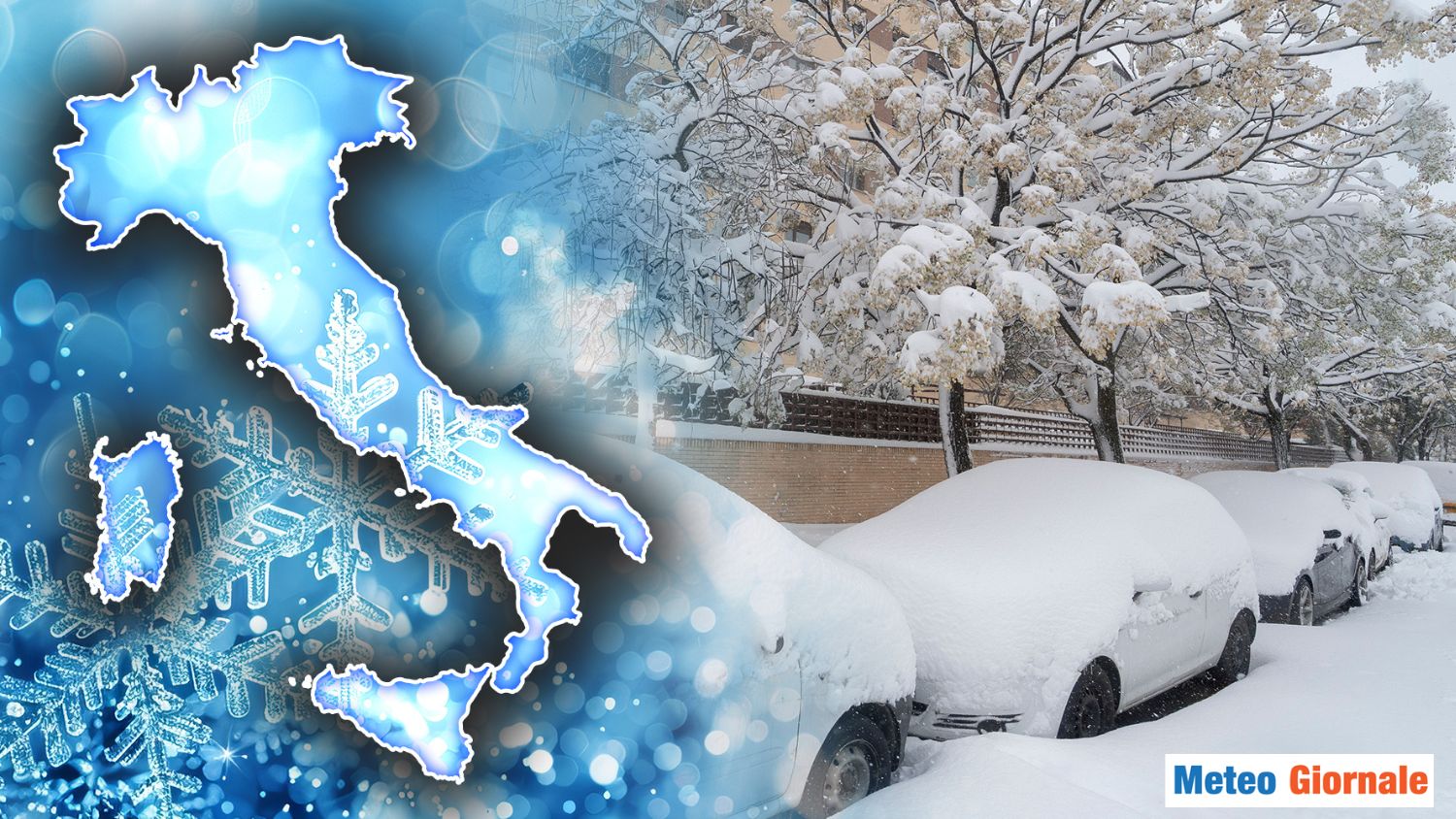
According to the latest weather analyses, a significant atmospheric change could affect Italy in the coming days, with a wave of freezing air coming from Russia capable of reaching our territory right around Epiphany.
The mathematical models, particularly the American one, outline a scenario that includes the opening of a cold air corridor directed from Eastern Europe towards our peninsula.
 Cold air from Russia towards Eastern Europe

Current weather simulations suggest that the Russian cold will invade large portions of Eastern Europe, involving the Balkans with temperatures well below the seasonal average.
This weather picture is supported by a hemispheric atmospheric dynamic that highlights marked climate variability.
For example, in the United States of America, the first decade of January 2025 will be characterized by a powerful cold wave, accompanied by widespread snowfalls and very low thermal values.
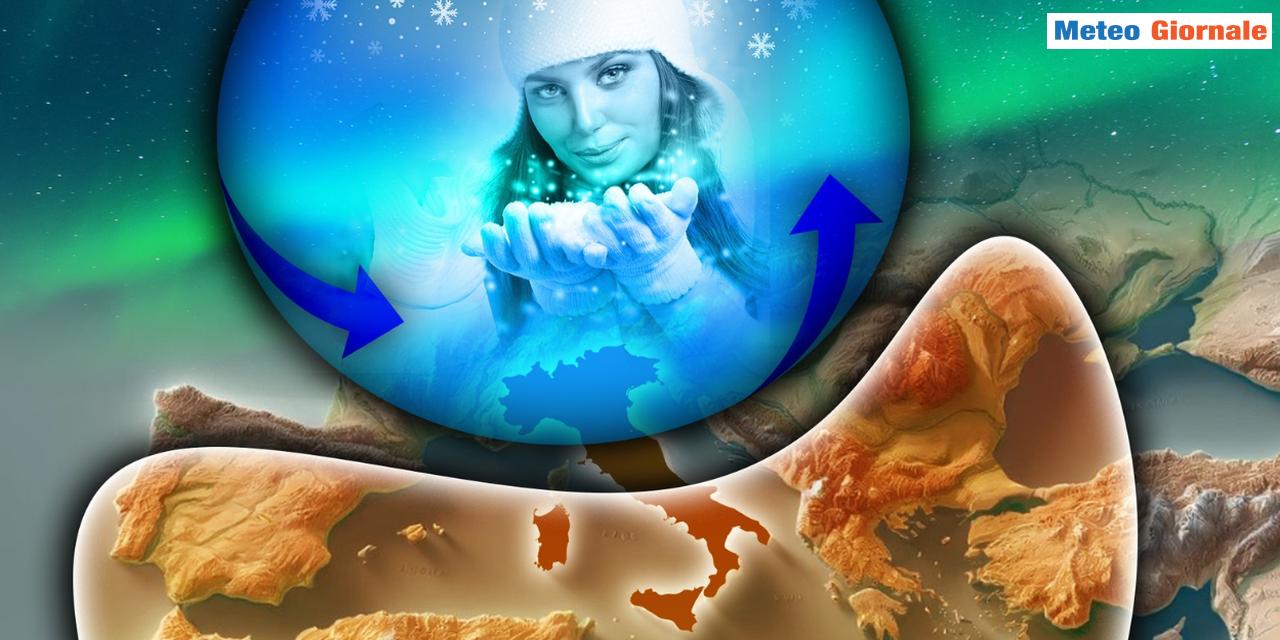
On the European side, a high-pressure area tends to stabilize in the Iceland region, a configuration favorable to promoting cold currents of eastern origin that could spread towards the Tyrrhenian Sea.
Here, the contrast between the freezing air and the more temperate air masses could generate low-pressure systems, increasing the likelihood of bad weather phenomena in Italy.
Risk of snow at low altitudes in Italy
In the presence of low pressure over the Tyrrhenian Sea, there is often a call for cold air from the Balkans, which, combined with thermal contrasts, can give rise to snowfall at very low altitudes, sometimes down to the plains.
At this stage, the possibility of snow in cities like Rome and Florence cannot be ruled out, although it remains a borderline hypothesis, linked to the evolution of this specific atmospheric scenario.
Currently, it cannot yet be confirmed with certainty the direct arrival of a mass of freezing air in Italy.
However, the severe cold that will affect Northern Europe and the Balkans is an important signal.
If the cold air were to actually flow into our territory in conjunction with the formation of low-pressure systems, it would be possible to witness a significant drop in temperatures, with episodes of snow down to the plains.
Impact on the weather of Italian regions
The Tyrrhenian regions, as usual in the presence of low-pressure systems, will be the first to be affected by any precipitation.
If the cold from Eastern Europe manages to interact with these disturbances, the chances of seeing snow even at very low altitudes will increase considerably.
This configuration could affect cities like Naples, Perugia, and the inland areas of Central Italy, as well as those of Northern Italy already predisposed to winter snow phenomena.
Even Southern Italy and the Main Islands could feel the indirect effects of this dynamic.
In particular, in Sicily and Sardinia, the cold could contribute to bringing significant precipitation to mountainous areas, with the possibility of snow at hilly altitudes.
Trend for Epiphany
The approach of Epiphany represents a key moment for the evolution of this weather situation.
The interaction between the eastern cold air and any Atlantic disturbances could create ideal conditions for widespread bad weather phenomena.
It is essential to continue monitoring the mathematical models in the coming days to verify if this configuration will be confirmed.
The Russian cold remains a concrete threat to Italy, especially if further reinforcements of high pressure over Iceland occur, which would favor an atmospheric circulation conducive to the transport of very cold air masses towards Southern Europe.
The weather conditions in the coming days will be crucial to outline a more detailed picture and to better understand the impact of this possible cold wave.
 Follow our feed