 I was watching the radar screen with bated breath, knowing that something extraordinary was about to happen.
A huge supercell was decisively moving towards the city, and the radar signature was unmistakable: an F5 category tornado, the highest on the scale, was now on its way. The tension and adrenaline were growing along with a sense of awe. Few things are as terrifying and, at the same time, fascinating as an F5 in action.
A few minutes later, the tornado sirens began to sound in the metropolis.
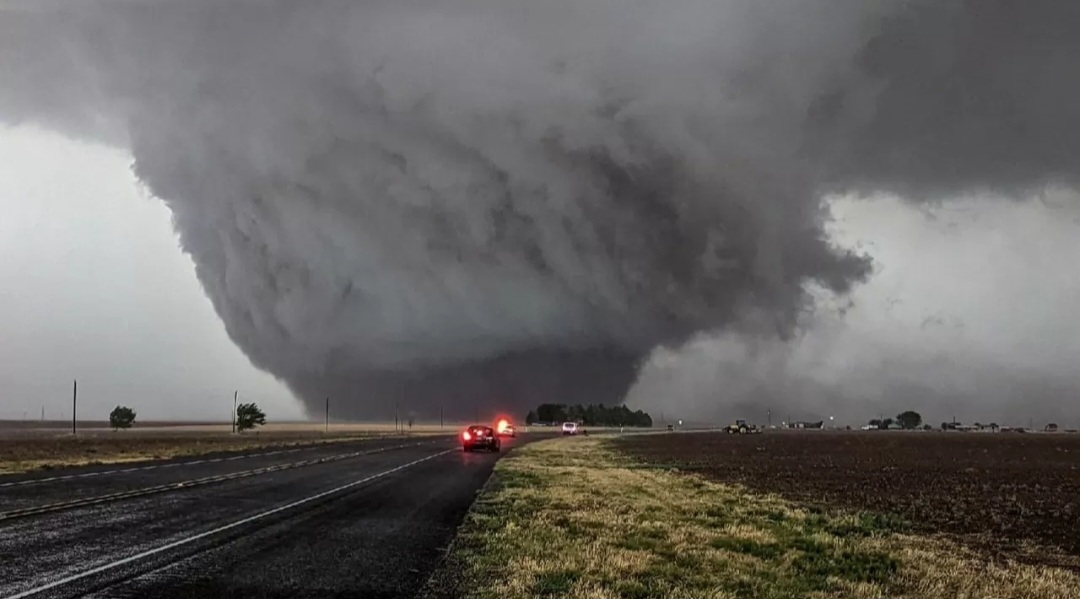
From the live images, I saw the vortex touch down, a dark and menacing column expanding over a kilometer wide. It was a colossus with terrifying winds, with gusts exceeding 300 kilometers per hour, capable of sweeping away anything in its path.
I had read and studied similar events for years, but witnessing it in real-time and in a densely populated city seemed surreal. The tornado began to move through the city with incredible precision. It passed between skyscrapers as if it were aware of their arrangement, moving with a trajectory almost impossible to conceive.
Debris was lifted into the air and spun like mad bullets, yet they seemed to miraculously avoid the most populated areas. 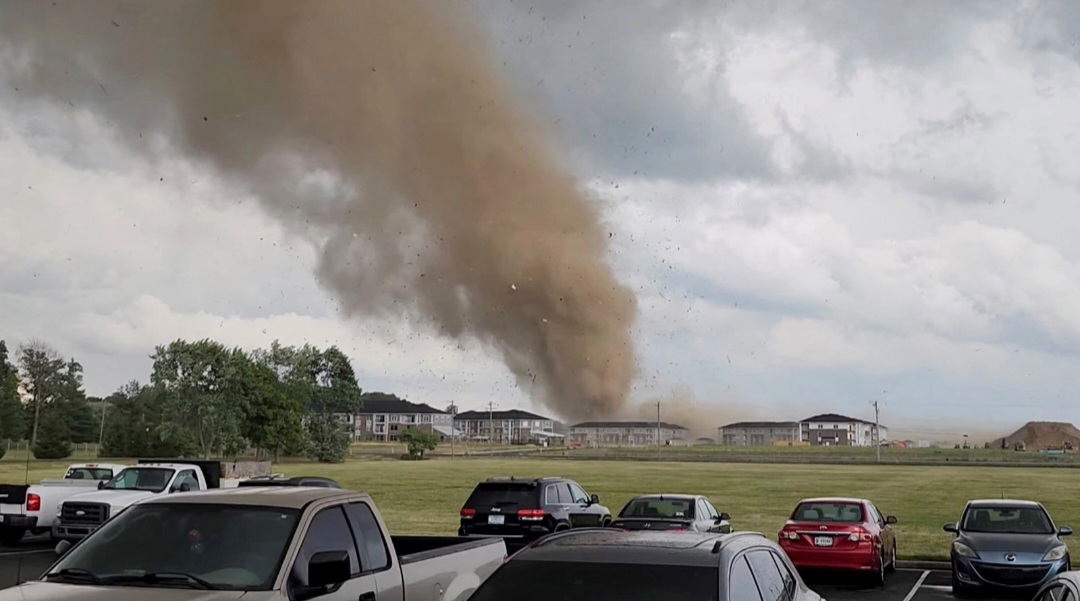 On the screen, I watched fascinated as the vortex continued its path: it crossed parks and deserted areas, skimming abandoned industrial zones and some sparsely populated areas. The tornado unleashed all its destructive force on objects, yet miraculously spared people.
Buildings that could have been razed to the ground withstood the passage; structures trembled but remained standing.
Cars and vehicles were lifted off the ground and hurled away, but without causing injuries or fatalities. After an interminable fifteen minutes, the tornado dissipated, leaving behind a marked but incredibly fortunate landscape. There was material damage, but it was contained, and most importantly, there were no human losses.
I had witnessed something unimaginable, yet so real: an F5 tornado that, in an apparent concession of nature, had crossed a metropolis without causing casualties. 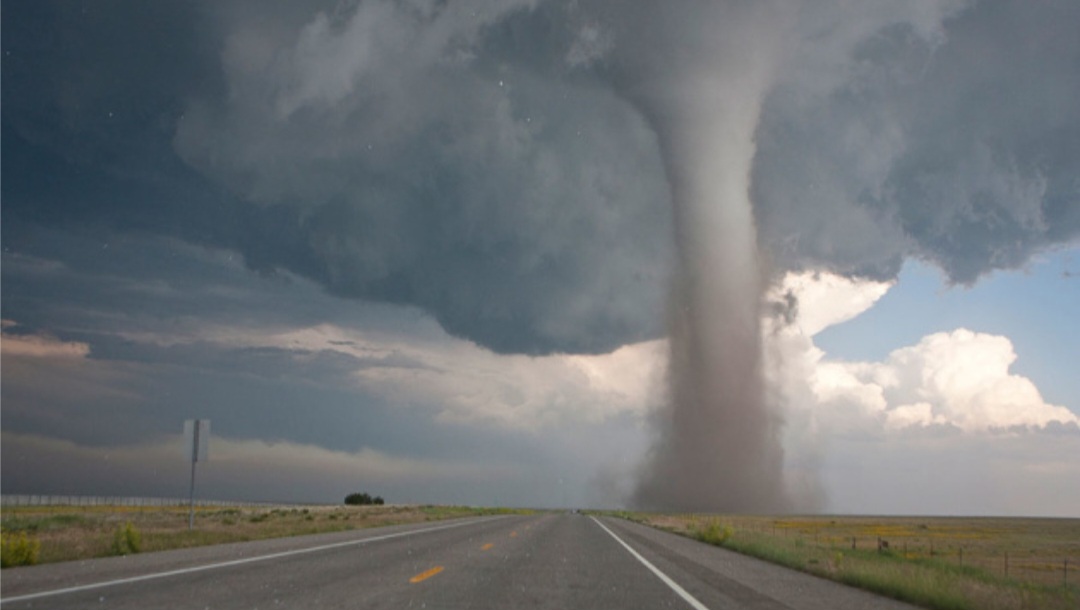 As silence fell and the sirens faded, I remained contemplating the exceptional nature of that moment. As a meteorology enthusiast, my heart was pounding for having seen firsthand the fury and power of nature express itself without bringing tragedies.
I had witnessed the unrealizable, and that tornado would forever remain etched in my mind as a unique and extraordinary event. Then I woke up.
 Follow our feed