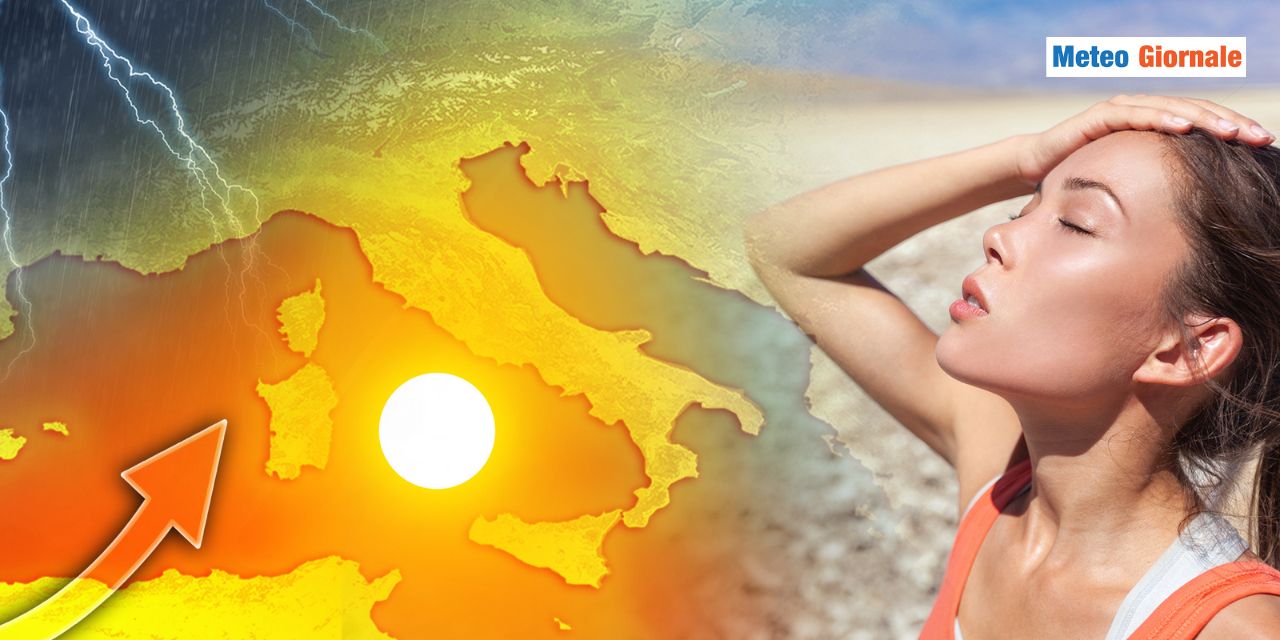
 The anticyclone at the end of October and the beginning of November brings stable conditions over most of Italy and Western-Central Europe, eliminating bad weather and blocking the passage of disturbances for a long period.
This high-pressure structure, fueled by warm and stable air from North Africa, will exert a massive and lasting influence, thus preventing the formation of significant atmospheric phenomena across the Peninsula.
With mild temperatures well above the seasonal average, the possibility of autumn rains will be drastically reduced. The currently dominant powerful anticyclone has consolidated with such intensity that it hinders the advancement of northern cold currents and Atlantic disturbances, usually more frequent in the heart of autumn.
This imposing high-pressure area will affect Northern Italy, Central Italy, and Southern Italy, creating an atmospheric barrier that will not only prevent rains from reaching the ground but also stop cool air from settling.
The depression vortex that caused thunderstorms and bad weather in the Western Mediterranean over the weekend has been pushed westward, giving way to the anticyclone. The impact will be especially evident in terms of temperature: temperatures well above the seasonal averages are expected, with highs that, especially in the central hours of the day, will reach unusual values for the period.
It will not just be a temporary stability episode; in fact, according to projections, the anticyclone could maintain its blocking characteristics for several days, perhaps for the entire first decade of November.
Fog and pollutants return
With the anticyclone dominating the Italian weather scene, the absence of rain and wind will lead to increased humidity during the night and early morning hours.
This phenomenon will favor the formation of dense fog in valleys and plains, especially in the Po Valley, where poor ventilation will prevent air exchange. Under these conditions, high relative humidity will be a key factor for the formation of persistent fog, with reduced visibility in the early hours of the day.
However, during the day, with the sun’s warming, visibility will tend to improve.
On the air quality front, the anticyclonic block will cause a progressive accumulation of pollutants in the lower atmospheric layers, especially in urban and industrial areas of Northern Italy, where air circulation will remain almost stagnant.
This type of anticyclonic situation is particularly disadvantageous for large cities like Milan and Turin, where air tends to get trapped, increasing particulate levels and worsening air quality.
Absence of rain and drought in the South
Despite the abundant rainfall of recent weeks, some areas of Southern Italy continue to suffer from a drought that has not yet been fully resolved.
The arrival of a long period of stability and the absence of rain in the coming days could further accentuate the water deficit in these areas. Sicily and Calabria, for example, could feel the negative impact of a prolonged dry phase precisely in one of the periods of the year when rainfall is normally abundant. Typically, autumn months are crucial to ensure the water supply needed to face the winter, but the presence of the anticyclone will prevent Atlantic disturbances from bringing the necessary rain.
This water shortage could have consequences for both agriculture and water resource supply in some locations in Southern Italy. With high pressure keeping Italy sheltered from cooler air masses, temperatures will continue to exceed typical autumn values.
In Northern Italy, in mountainous and hilly areas, daytime temperatures are expected to reach values between 20°C and 24°C, while in cities in Central Italy like Rome and Florence, highs between 22°C and 25°C can be expected.
In Southern Italy and the Main Islands, especially in Sardinia and Sicily, daytime values will remain on averages of 22°C–27°C, making the climate decidedly milder than usual.
On the other hand, minimum temperatures will drop less compared to the highs and will vary between 10°C and 15°C in Northern Italy, while in Central-Southern Italy they will not fall below 13°C–16°C.
This slight thermal gap between day and night, typical of anticyclonic situations, gives the climate a stability that, while ensuring pleasant days, temporarily delays the arrival of typical autumn cold.
 Follow our feed