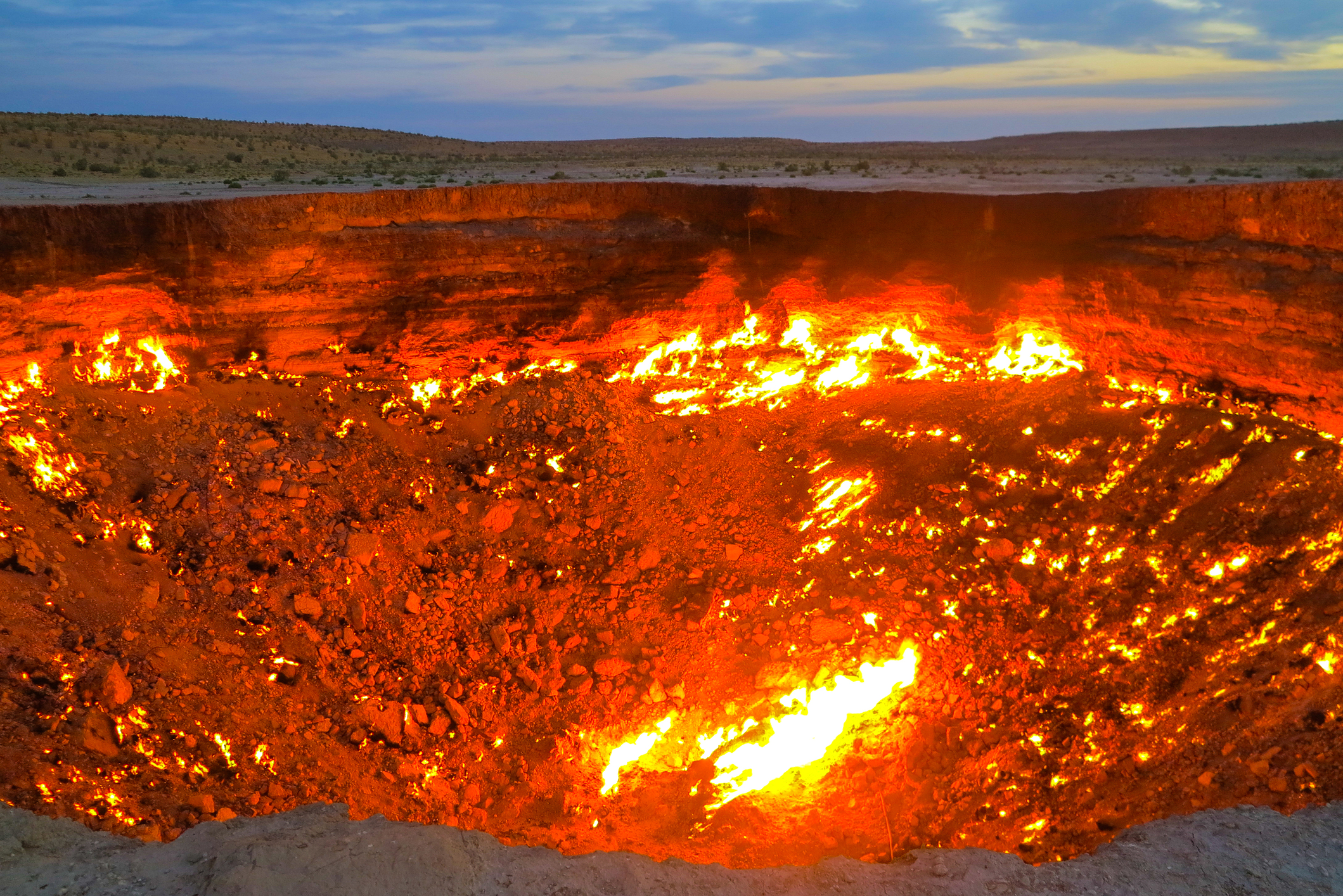
 In the last ten years, the Yamal Peninsula, located in Siberia, has been the site of an unusual geological event: the appearance of numerous large craters, the first of which was discovered in 2014.
Since then, more craters have emerged, generating perplexity and speculation.
However, recent scientific studies seem to have solved the mystery, linking their formation to explosive methane releases caused by a combination of unique geological conditions and climate warming. Initial research conducted near the craters had detected high concentrations of methane, a potent greenhouse gas, suggesting that these giant cavities were the result of gas leaks.
Scientists hypothesized that methane, trapped under the Siberian permafrost, was escaping due to rising temperatures in the region, caused by climate change. Although this theory partially explained the phenomenon, it was not sufficient to justify the explosive dynamics that led to the formation of these enormous craters.
Particular geological conditions and climate change
A more in-depth investigation revealed that the cause lies in a complex set of geological and climatic factors. Ana Morgado, a chemical engineer at the University of Cambridge, explained that such an explosive phenomenon can only occur under extremely particular geological conditions. The surface warming, linked to rising temperatures, causes a rapid increase in underground pressure, eventually leading to a powerful release of methane. The research team studied whether this process was triggered by a chemical or physical reaction.
According to Julyan Cartwright, a geophysicist at the Spanish National Research Council, the explosion can occur in only two ways: through a chemical reaction or a physical event. With no evidence of chemical reactions in the Siberian craters, scientists concluded that the formation of the craters is the result of a physical reaction.
The explosion mechanism: a natural osmotic pump
To explain the phenomenon, researchers used the analogy of a bicycle inner tube: when it is overinflated, it eventually bursts. In the Yamal Peninsula, the mechanism is similar but occurs through an osmotic process. The region is characterized by a thick layer of permafrost, which acts as an osmotic barrier. Beneath a surface layer called the active layer, which varies seasonally, lies the perennial permafrost, extending to a depth of between 180 and 300 meters. Within this permafrost, there are specialized zones containing highly saline unfrozen water, called cryopegs, located above methane hydrates, which are solid crystals of water and methane gas. As temperatures rise, the active layer of the permafrost melts and expands towards the cryopegs, causing an increase in osmotic pressure. When this pressure becomes unsustainable, cracks form that extend to the surface, causing a sudden drop in underground pressure. This process damages the methane hydrates, releasing the gas, which causes a physical explosion, similar to the bursting of an overinflated inner tube. Future implications of the phenomenon The phenomenon of craters in the Yamal Peninsula is a clear signal of the effects of climate change on Arctic regions.
Global warming is destabilizing the permafrost, accelerating the release of methane, a gas that further contributes to the greenhouse effect.
This cycle of warming and explosions could become increasingly frequent, with significant implications for the global environment and local populations.
 Follow our feed