The autumn seems determined to make its way early, disrupting the forecasts of a start of September characterized by stability and persistent heat.
The North African ridge, which has so far ensured clear days and high temperatures, could give way under the pressure of a system of disturbances coming from Western Europe.
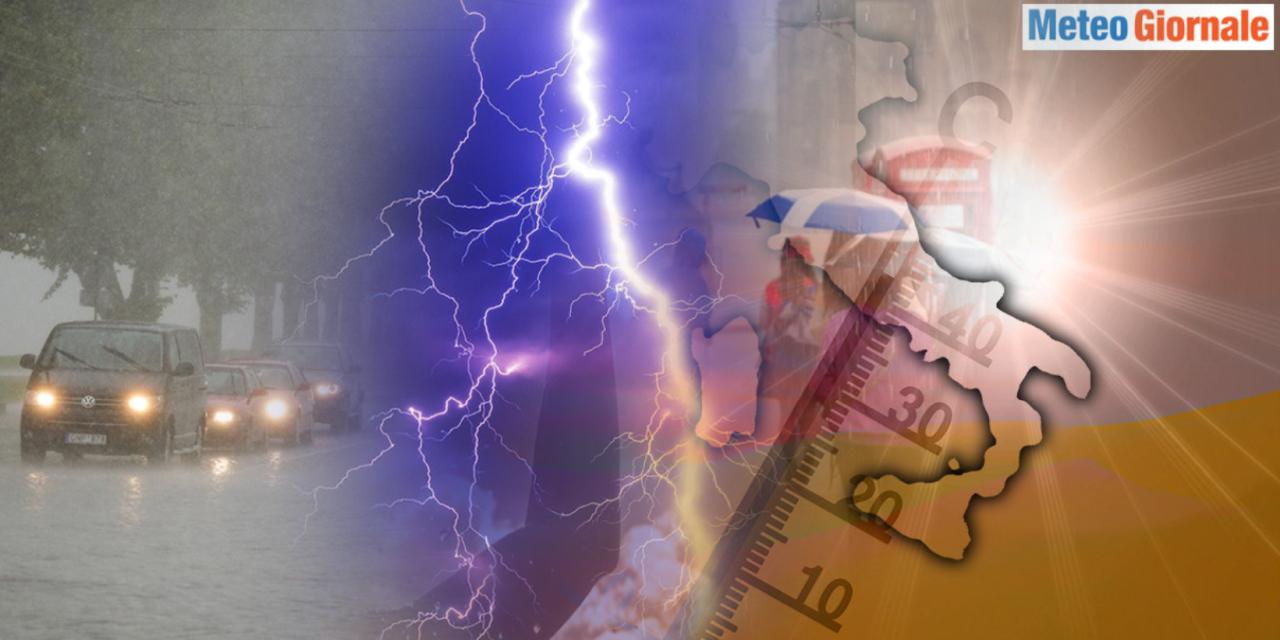
Starting tomorrow, Italy will be hit by a significant weather change, with rain and thunderstorms ready to bring bad weather to several regions. An intense disturbance of North Atlantic origin is preparing to hit Spain, France, and England with force, but it will not spare our country. Between Thursday and Friday, the extension of this storm vortex will also reach Italy, unleashing thunderstorms and widespread precipitation.
This early autumn will result in a deterioration of the weather that could surprise many with its speed.
The northern regions of Italy will be the first to experience the effects of bad weather, with thunderstorms that could also be of strong intensity.
The sharp drop in temperatures
Temperatures will undergo a drastic decrease, marking a return to seasonal average values, especially in Northern Italy.
Here, starting from Friday, the cool air coming from the North Atlantic will lower the thermometers, putting an end to weeks of intense heat.
On the contrary, in the southern regions of Italy, the temperature drop will be less evident until the weekend, when the influence of the Atlantic currents will also be felt here, leading to a decrease in temperatures. Sicily and Sardinia, although initially spared from the sharp drop, will also see a progressive decrease in temperatures starting from the weekend.
In any case, it is advisable to keep an umbrella handy, as the arrival of rain will be inevitable.
End of the African summer
The African summer, which has dominated the weather in Italy in recent weeks, could end as early as the beginning of next week.
The cool currents from the North Atlantic will dissipate the accumulated heat, bringing the weather back to more typically autumnal conditions. This change will be particularly evident in the northern and central regions, while in the South the transition will be more gradual.
 Follow our feed