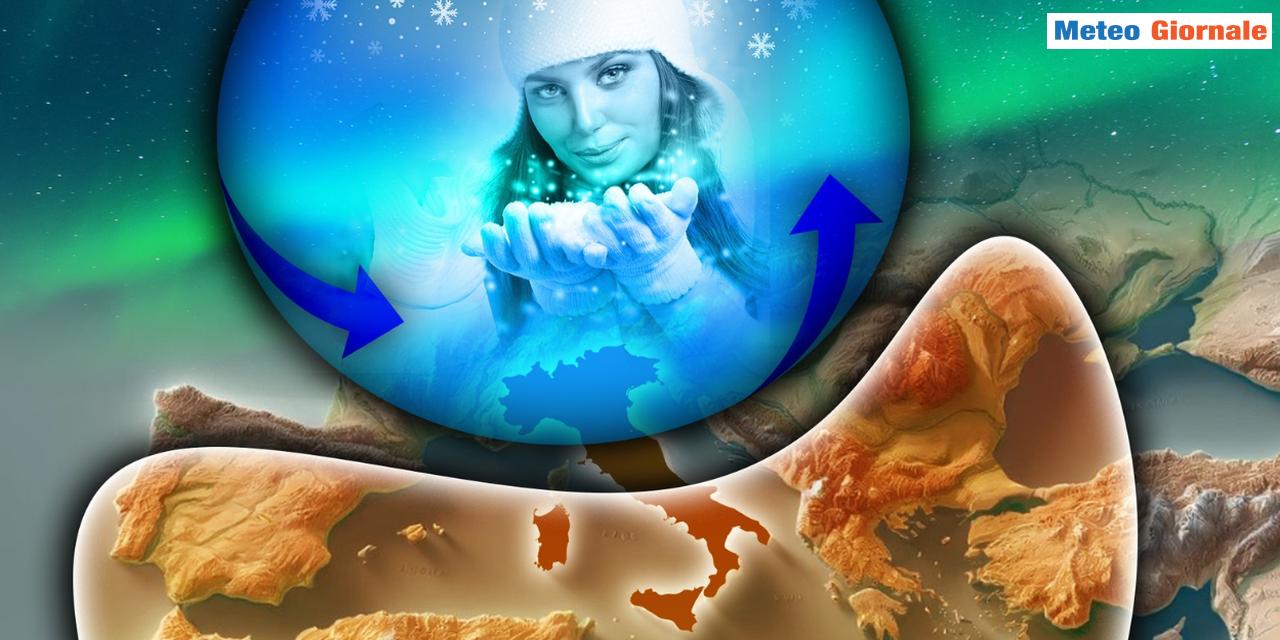
Atlantic thermal anomalies, particularly those related to Sea Surface Temperature (SST), have a significant impact on the weather patterns in Europe and Italy.
These anomalies are variations in ocean temperature compared to the climatic average and can be positive, with sea temperatures above normal, or negative, with lower values.
Atlantic thermal anomalies directly influence atmospheric conditions, causing variations in pressure regimes, jet streams, and seasonal weather patterns, including the autumn season in Italy.
Influence of thermal anomalies on the Italian autumn
Atlantic thermal anomalies play a key role in shaping the Italian autumn season, particularly regarding precipitation distribution and temperatures.
If the surface waters of the Atlantic Ocean are warmer than usual (positive anomalies), they can contribute to an increase in air humidity.
This leads to an increase in the amount of water vapor available for disturbances, favoring more intense bad weather phases characterized by heavy rains and thunderstorms.
These phenomena can particularly affect Northern Italy and Central Italy, areas more exposed to Atlantic disturbances.
On the other hand, negative thermal anomalies, i.e., colder than normal waters, tend to stabilize the atmosphere, reducing cyclonic activity.
In this scenario, autumn can be characterized by drier and more stable periods, with few rains and milder temperatures, especially in Southern Italy and the Main Islands.
This stabilizing effect can prolong summer-like weather conditions even in the autumn months.
Jet streams and their relationship with thermal anomalies
Another crucial factor linked to Atlantic thermal anomalies is the position and strength of the polar jet stream, a high-altitude air current that drives disturbances from west to east.
The anomalous temperatures of the Atlantic influence the trajectory of the jet stream, determining whether or not disturbances pass over Europe and Italy.
With positive thermal anomalies, the jet stream tends to shift further south, favoring the entry of humid and cold disturbances over Northern Italy and Central Italy.
This generates periods of bad weather, with persistent rains and cooler temperatures compared to the seasonal average.
Conversely, with negative thermal anomalies, the jet stream can remain further north, leaving Italy under the influence of high pressures that bring atmospheric stability and drier weather conditions.
Effects on temperatures and precipitation
The influence of Atlantic thermal anomalies on the autumn season is mainly manifested through changes in temperatures and precipitation distribution.
Positive anomalies in autumn can lead to out-of-season heatwaves, especially in the regions of Southern Italy and the Main Islands, where temperatures above 25°C are often recorded even in the months of October and November.
This happens when high pressures block Atlantic disturbances and favor the influx of warm air from the south.
Negative thermal anomalies, on the other hand, tend to bring early cold. Northern Italy, in particular, can experience lower than normal temperatures, with maximums below 15°C as early as October and early cold spells in November.
The Alpine regions can see the first snowfalls even in autumn in case of strong cooling of the Atlantic.
Long-term impacts
Atlantic thermal anomalies not only influence short-term weather but also have long-term implications for the autumn season and extreme climatic events.
In a global warming context, positive anomalies are becoming more frequent, leading to warmer and wetter autumn seasons in many parts of Europe and Italy.
However, these conditions can create imbalances in the climate system, with periods of drought alternating with episodes of extreme bad weather, as has happened in recent autumns.
The increased frequency of positive Atlantic thermal anomalies makes Italy more vulnerable to intense precipitation events, such as flash floods and landslides, especially in already predisposed regions like Liguria, Veneto, and Tuscany.
At the same time, the regions of Southern Italy and the Main Islands could suffer from long periods of drought, alternating with intense and concentrated rains in short periods, causing damage to agriculture and the territory.
Atlantic thermal anomalies play a determining role in defining the weather patterns of the Italian autumn, with effects both in the short term and the long term.
Continuous monitoring of ocean temperatures and the jet stream is essential to accurately predict seasonal trends and mitigate the risks associated with extreme weather phenomena.
 Follow our feed