Will it be a January like the old times? In recent years, we have often encountered particularly anticyclonic January months, lacking both rain and snow, but this year the situation could be totally opposite.
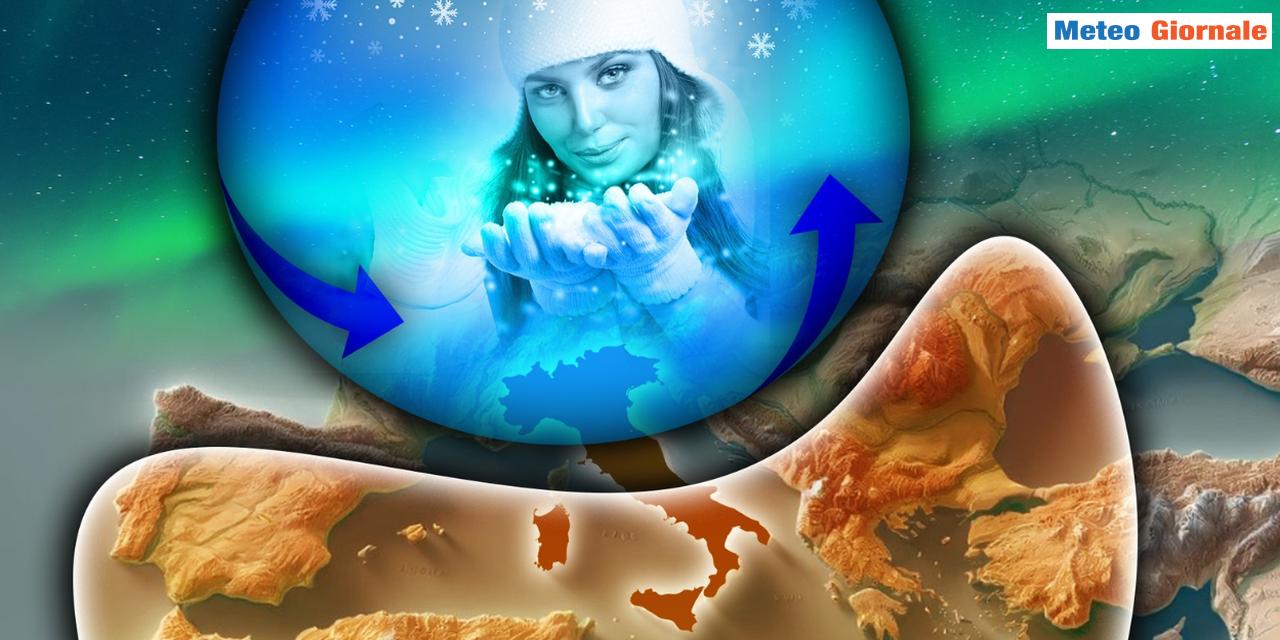
Currently, the weather conditions are very stable in every corner of Italy, but the polar vortex is set to weaken significantly in the coming days, favoring the descent of enormous masses of cold air towards the old continent.
An immense reservoir of cold air
Within a few days, around Epiphany, an immense reservoir of cold air will develop between Scandinavia and European Russia. Temperatures will plummet in many Eastern European countries, even more than 50 °F below the typical averages for the period, a clear sign of the arrival of polar frost in these territories.
This cold will be crucial for the arrival of heavy snowfalls down to the plains across Scandinavia and Eastern Europe, amplifying the albedo effect.
The albedo effect
A real chain reaction could occur: the presence of a vast snow cover over Eastern Europe and Scandinavia would trigger the albedo effect, amplifying the cooling of the lower layers of the atmosphere day by day.
In short, the area, already very cold and frosty in itself, will tend to cool down even more as the days go by, according to the same principle that reigns in Siberia and the North Pole.
A cold wall and its impact
In this way, a real cold wall could rise, which would have a significant impact on the jet stream in the Atlantic.
The presence of this cold wall over Northern and Eastern Europe would force the stream to undulate, facilitating the arrival of high pressures at subpolar latitudes and, consequently, favoring the descent of the frost towards the Mediterranean and Central Europe. And so, between the first and second decade of January, the frost could reach our peninsula on multiple occasions and with considerable ease, causing sudden deteriorations in the weather with snow, cold, and fully winter weather conditions.
 Follow our feed