The weather for the upcoming week will be characterized by an intense wave of bad weather in Italy, with the arrival of two storms and winds that in some areas could reach speeds of 90 km/h, accompanied by a high risk of storm surges.
The origin of this situation can be traced to a cold front of Arctic-Maritime origin that, descending from Northern Europe, will cross the country in the coming days.
This influx of cold and unstable air will favor the formation of a Cyclone that will trigger particularly adverse weather conditions.
Tuesday, November 19 will mark the beginning of this phase with an initial strengthening of the Libeccio winds, which will affect most of the Tyrrhenian, Adriatic (in the form of Garbino) and Ionian sectors.
Gusts could reach 50 km/h, bringing a significant increase in wind intensity and creating difficulties especially along exposed coasts. 
However, Wednesday, November 20 will be the most critical day, with the Cyclone in full activity.
Winds from the southern quadrants will intensify further, reaching stormy gusts between 80 and 100 km/h.
The coasts of Lazio, Campania, Calabria, and Sicily will be particularly vulnerable, with the concrete risk of storm surges that could cause significant disruptions, including navigation problems.
With the progressive movement of the Cyclone towards the Southeast, there will be a change in the direction of the wind, which will rotate from the northern quadrants.
In this context, the Mistral will make its appearance, initially hitting Sardinia and then quickly extending to much of the territory.
This wind will be accompanied by a sharp drop in temperatures, marking the arrival of a decidedly colder and more wintery climate. 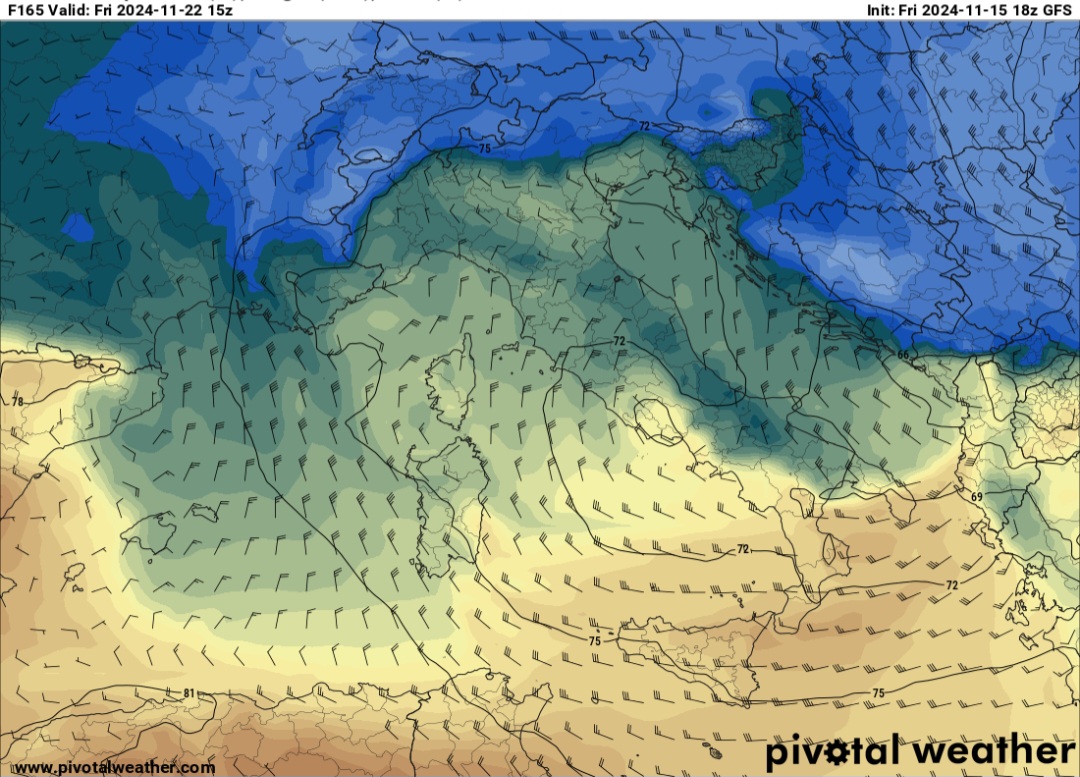
The double storm expected represents one of the most typical atmospheric configurations for the period, but with particularly significant intensity. The effects of this phase of bad weather could be significant, both for the impact on daily activities and for the disruptions along the coasts and in sectors exposed to the most intense winds.
It will be essential to monitor the weather evolution to adopt the necessary measures to contain the risks.
 Follow our feed