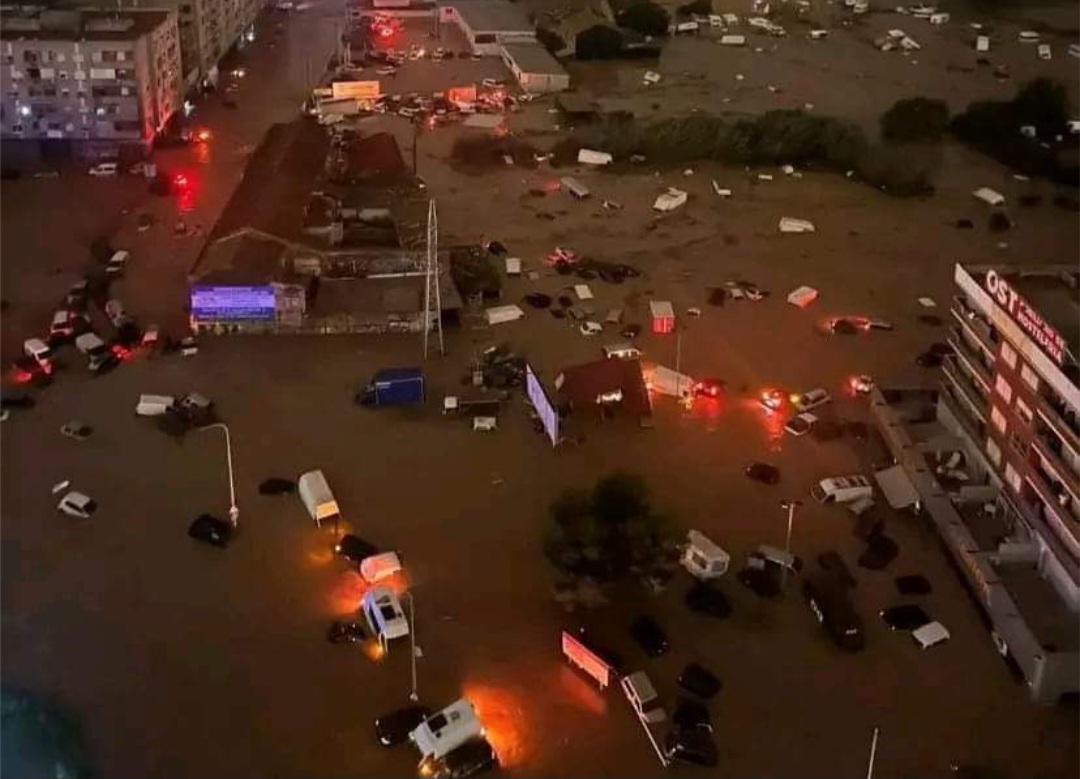
 Spain has recently been the scene of an unprecedented flood, which hit the Valencian region with torrential and devastating rains.
A V-shaped thunderstorm, characterized by its ability to self-regenerate, stationed over the area for several hours, releasing exceptional amounts of rain.
This extreme weather phenomenon was fueled by a cold cyclonic circulation, positioned between the Iberian Peninsula and Morocco, which acted as a barrier, trapping the storm system and amplifying its effects.  In particular, the municipality of Chiva was dramatically affected, with rainfall accumulations reaching 435.8 mm over six hours, most of which – 343 mm – concentrated in just four hours until the evening of October 29.
Such a level of precipitation, concentrated in such a short period, generated widespread flooding that paralyzed the area, causing severe damage to local infrastructure and disruptions for the population.
Flooded roads, blocked transportation, homes invaded by water: the scenario that unfolded in Valencia and its surroundings was one of true emergency.
Local authorities and citizens had to face a crisis that, according to climatologists, can no longer be considered rare.
In recent years, phenomena of this magnitude have intensified in frequency, a clear sign of the impact that climate change is having on the Mediterranean area.
The self-regenerating capacity of the V-shaped thunderstorm, combined with a stationary atmospheric situation, indeed represents a dangerous indicator of how weather dynamics are changing.  This event only reinforces the urgency of planning adaptation strategies and strengthening infrastructure to cope with future episodes of sudden floods.
Investing in resilient infrastructure, developing emergency plans, and promoting climate awareness are fundamental steps to protect communities exposed to these new forms of vulnerability.
The deluge that hit Valencia highlights how climate change is already affecting our daily lives and how essential it is to act quickly to mitigate its destructive effects.
 Follow our feed