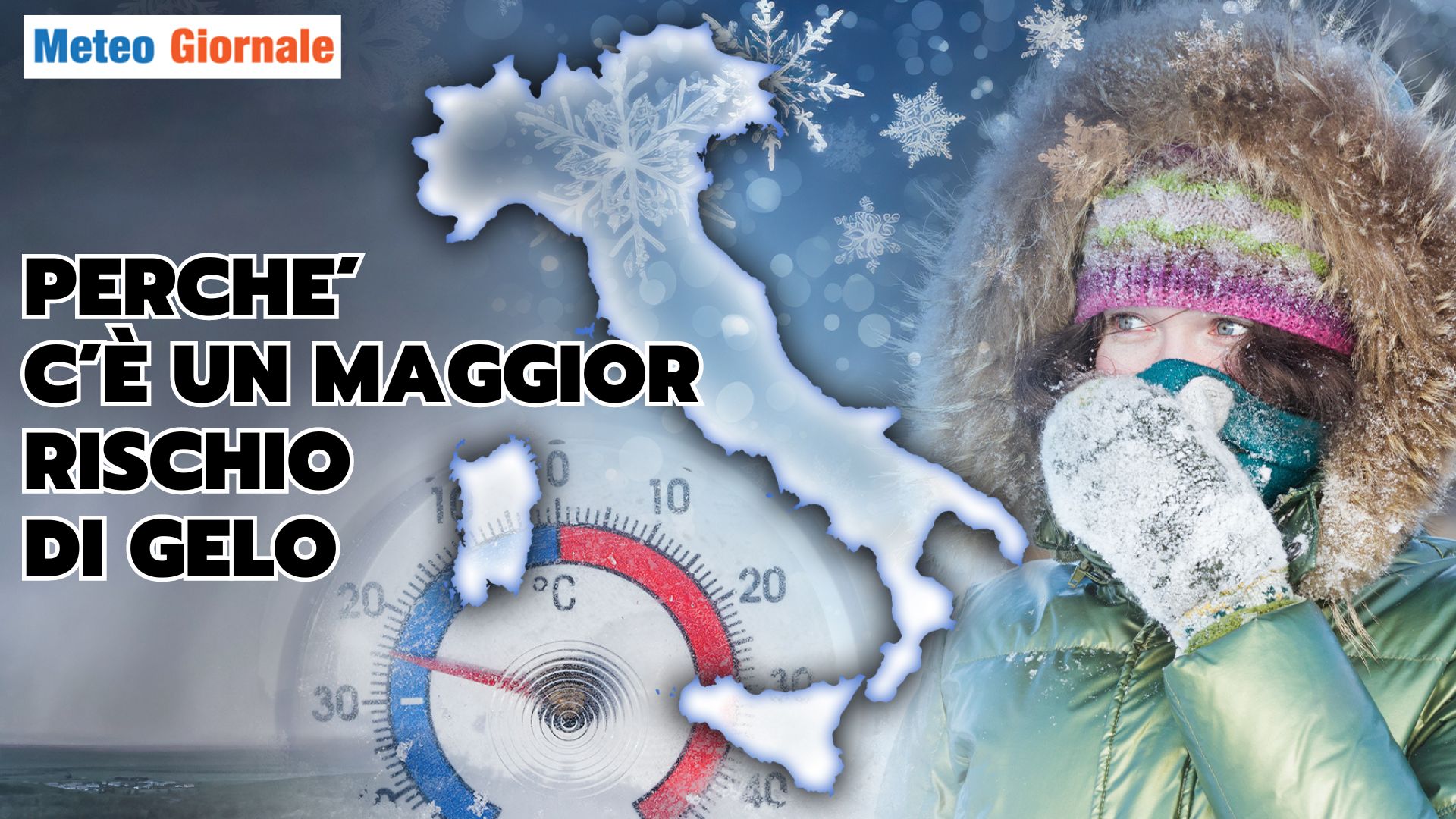
 The winter of 2024/2025 could present particularly severe weather conditions, with a significant increase in the risk of cold waves that could hit Europe hard and reach as far as Italy.
This prospect is linked to the formation of a weak and unstable Polar Vortex, which could favor the descent of cold currents from the Arctic regions, through Siberia, to the European continent.
The phenomenon is expected to be more extreme than what has been observed in the last twenty years, with numerous meteorological factors that could intensify climatic instability.
Among these, the weakening of the polar vortex and thermal anomalies affecting Siberia, making the winter of 2024/2025 a high-risk period for exceptional cold waves, with consequent snowfalls and temperatures well below seasonal averages.

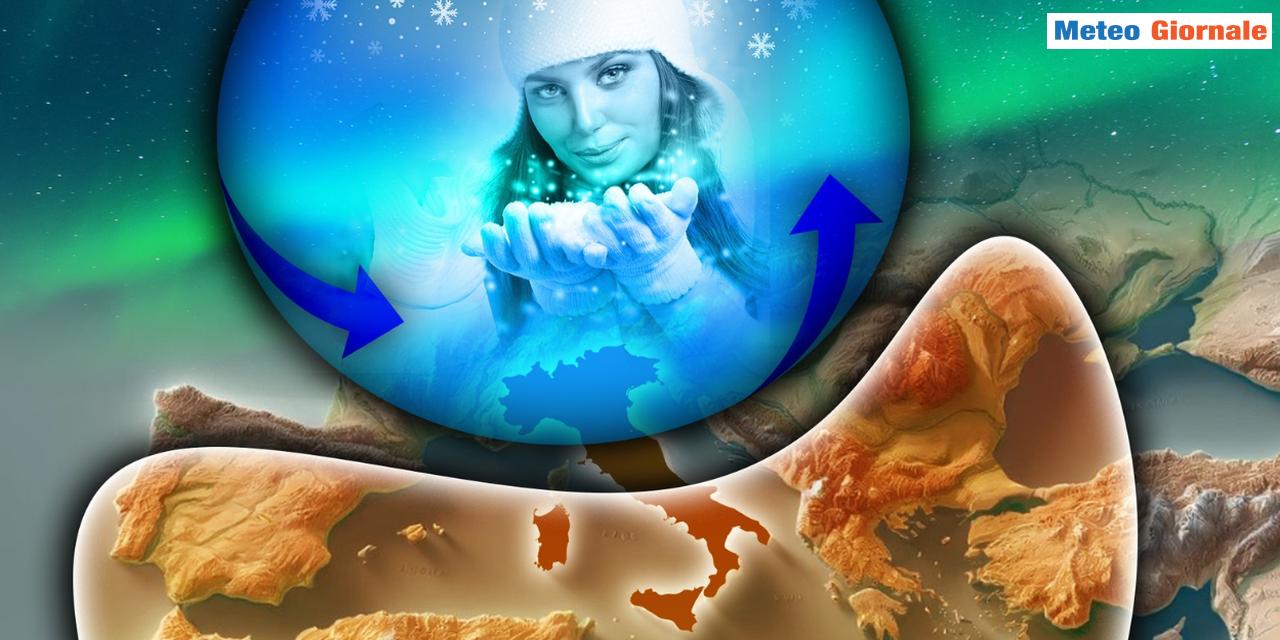
Where we see a Polar Vortex and Europe in the cold.
This is the common imagination.
But things are very different.


Unstable Polar Vortex and risk of extreme cold The Polar Vortex is a vast area of low pressure and frigid air that normally remains confined above the Arctic thanks to the circulation of circumpolar winds.
However, weather forecasts for the winter of 2024/2025 show that this vortex could be significantly weaker than usual, especially in the months of January and February.
This weakness is a determining factor for atmospheric instability that allows cold air masses to escape towards lower latitudes.
When the Polar Vortex is weak, the Jet Stream (the jet stream that circulates in the Earth’s atmosphere) also loses compactness.
This means that Arctic cold currents encounter fewer obstacles in their movement southward, affecting much of Europe, with particular attention to Northern Italy and Central Italy, regions that could be exposed to a greater risk of intense cold.
The consequences could be particularly evident in Southern Italy, where the cold could even reach coastal areas. Influence of Siberia and climatic anomalies The influence of Siberia plays a crucial role in the development of these extreme weather conditions.
The Siberian region is experiencing a period characterized by thermal anomalies, i.e., higher than normal temperatures in some areas, which disrupt the atmospheric balance and favor the release of frigid air towards Europe.
This scenario increases the possibility of intense cold waves that could reach as far as Southern Italy, with harsher climatic conditions compared to the historical average of recent decades. Siberia could thus become a constant source of cold air, capable of fueling extreme weather events throughout Europe, creating a potential for prolonged frost even for Northern Italy and Central Italy.
The cities that could be most affected include Milan, Turin, Florence, and even Rome, where the cold could manifest with unusual snowfalls, especially in January and February.
Weather and Sudden Stratospheric Warming (SSW): the effects on Italy
Another phenomenon that could decisively influence the weather of the winter 2024/2025 is the so-called Sudden Stratospheric Warming (SSW), a sudden warming of the stratosphere that causes a weakening of the polar vortex.
When this happens, the masses of cold Arctic air tend to move southward, affecting areas that normally do not experience the effects of Arctic cold.
Events of SSW are expected with greater probability due to atmospheric conditions influenced by the La Niña phenomenon, which has been active for months.
According to weather forecasts, if a sudden stratospheric warming were to occur during the winter, the cold air accumulated above the Arctic could be diverted towards Europe, bringing abundant snowfalls and harsh temperatures even in Mediterranean regions such as Southern Italy and the Main Islands.
The cold waves that could hit Northern Italy would have severe impacts on cities like Bologna and Verona, with temperatures potentially dropping below -10°C, while the Po Valley could be hit by heavy snowfalls, accumulating up to 80 cm of snow in some areas. Central Italy, especially in mountainous areas, could experience similar conditions, with cities like L’Aquila and Perugia potentially seeing significant snow accumulations, leading to traffic disruptions.
The impact of frost in Italy: possible scenarios
Extreme weather in Italy could result not only in a drastic drop in temperatures but also an increased risk of snowfalls in areas where these phenomena are rare.
During the last significant events, such as the Burian of 2018, cities like Rome and Naples saw temperatures plummet to -10°C, with resulting snowfalls covering the historic center of the capital and Mount Vesuvius.
If the Polar Vortex were to weaken further and an SSW event occurred, it is possible that Sicily and Sardinia would experience a drop in temperatures, with snowfalls potentially affecting even coastal areas.
During the Burian, cities like Palermo and Catania saw snow covering palm trees and seafronts, creating a surreal scenario for these normally warm areas.
In Northern Italy, the arrival of Arctic air could cause extreme cooling with temperatures dropping below -20°C in some areas, especially near the Alps.
Cities like Milan and Turin could record significant snow accumulations exceeding 50 cm, paralyzing daily activities and causing urban traffic disruptions.
Possible consequences of atmospheric blocking
When conditions of atmospheric blocking occur, cold air masses remain stagnant over certain areas for a prolonged period, causing a further drop in temperatures.
This situation can last for weeks, extending winter in many regions of Europe and increasing the risk of intense snowfalls and sub-zero temperatures.
In the past, episodes of this type of extreme weather have had devastating effects on Italy’s infrastructure system, with the blockage of major communication routes and difficulties in the supply of electricity and essential services.
The winter of 2024/2025 could prove particularly challenging if such conditions were to occur again, especially in the more vulnerable areas of Southern Italy and the Main Islands.
Weather: forecast of cold and snowfalls until spring
The winter season 2024/2025 could extend until the beginning of spring, should the potential SSW occur in the second part of winter.
Current weather forecasts suggest that the cold from Siberia could continue to influence the European climate for much of March, delaying the return of milder temperatures.
In this context, Italy could be among the countries most affected by the consequences of cold waves, especiallyIf the polar vortex fails to recover in time, leaving the door open to new incursions of Arctic air until April.
 Follow our feed