The Polar Vortex is a fundamental meteorological system for understanding the progression of autumn and winter seasons, both in Europe and in Italy.
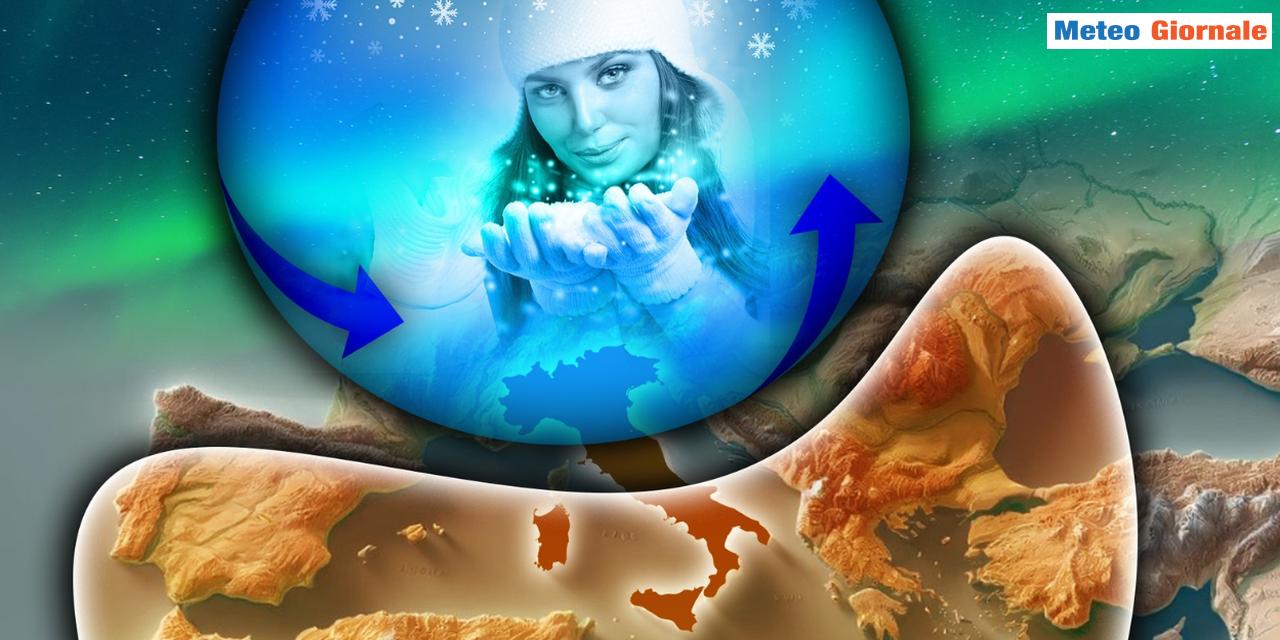
It is a vast area of low pressure located above the North Pole, characterized by strong winds that rotate counterclockwise.
These winds act as a barrier that confines the cold polar air to the northern regions.
Its stability or instability is closely linked to weather dynamics during the colder months.
The role of the Polar Vortex
In autumn and especially in winter, the behavior of the Polar Vortex strongly influences temperatures and climatic conditions at lower latitudes.
When the vortex is strong and well-structured, cold air currents remain confined around the North Pole, keeping Europe and Italy relatively mild, especially in the regions of Central Italy and Southern Italy.
Conversely, when the vortex weakens or fractures, openings are created that allow cold air to move southward.
Impacts on Europe and Italy
During periods when the Polar Vortex weakens, cold waves become more likely.
In Europe, these can lead to particularly harsh winter conditions, with temperatures dropping below 0°C in many areas, especially in Northern Italy.
This dynamic is often accompanied by intense and widespread snowfall, even at low altitudes, and by icy winds coming from Siberia or the Arctic.
Regions such as Northern Europe and Northern Italy are particularly exposed, but also Central Italy and, in some cases, Southern Italy and the Main Islands can be affected.
A weak polar vortex can also favor the occurrence of extreme weather events, such as sudden snowstorms or prolonged frost.
The oscillations of the vortex, known as the Arctic Oscillation (AO), have a direct impact on how much cold will push southward.
When the AO is negative, the cold descends to lower latitudes, hitting Italy hard.
Consequences on weather forecasts
Predicting the behavior of the Polar Vortex is crucial for seasonal weather forecasts.
Monitoring its strength and stability provides important indications on how winter conditions will evolve.
A stable and strong vortex suggests a relatively mild winter, while a weak vortex brings higher chances of intense cold and snowfall.
Meteorology experts constantly keep an eye on the vortex dynamics to provide more accurate forecasts, especially in autumn when winter trends are defined.
In Italy, the variability of the Polar Vortex can significantly influence the seasonal trend.
A weak vortex often brings cold and snow even to areas less accustomed to such conditions, such as Central and Southern Italy.
Temperatures can drop several degrees below the seasonal average, with frosts reaching even the coasts.
However, if the vortex remains stable, the winter climate in Italy will be milder, with temperatures rarely dropping below 5°C in coastal areas.
Polar Vortex and global warming
Climate change is also altering the behavior of the Polar Vortex.
Some studies suggest that the warming of the Arctic may weaken the vortex, increasing the frequency and intensity of its oscillations.
This could result in more extreme winters for Europe and Italy, with more intense and prolonged cold episodes.
However, the relationship between global warming and the Polar Vortex is still a subject of study and debate within the scientific community.
The Polar Vortex thus remains a central element for understanding winter climatic dynamics, influencing weather conditions not only in the Arctic regions but also in Europe and Italy.
 Follow our feed