In recent years, we have become accustomed to an increasingly unpredictable climate, with extreme phenomena occurring relentlessly: from unusual heatwaves to violent storms, including tornadoes and out-of-season snowfalls.
But what is really happening? Why do meteorologists, with all their advanced technologies and forecasting models, often seem caught off guard by what happens in the sky?
The answer is not simple, but there are several causes contributing to the increase in uncertainty in weather forecasts, one of which is related to climate change.
Global warming has altered traditional climate patterns, making it much more difficult to accurately predict not only long-term weather phenomena but also short-term ones.
Climate change as a key factor
One of the most evident effects of climate change is the increase in global temperature.
This warming is causing the intensification of weather phenomena that, until a few decades ago, were rare or less intense.
The so-called “water bombs,” for example, are short but extremely violent thunderstorms, with concentrated precipitation that causes sudden flooding and devastation in unprepared urban areas.
Atmospheric currents are changing, making predictions more difficult.
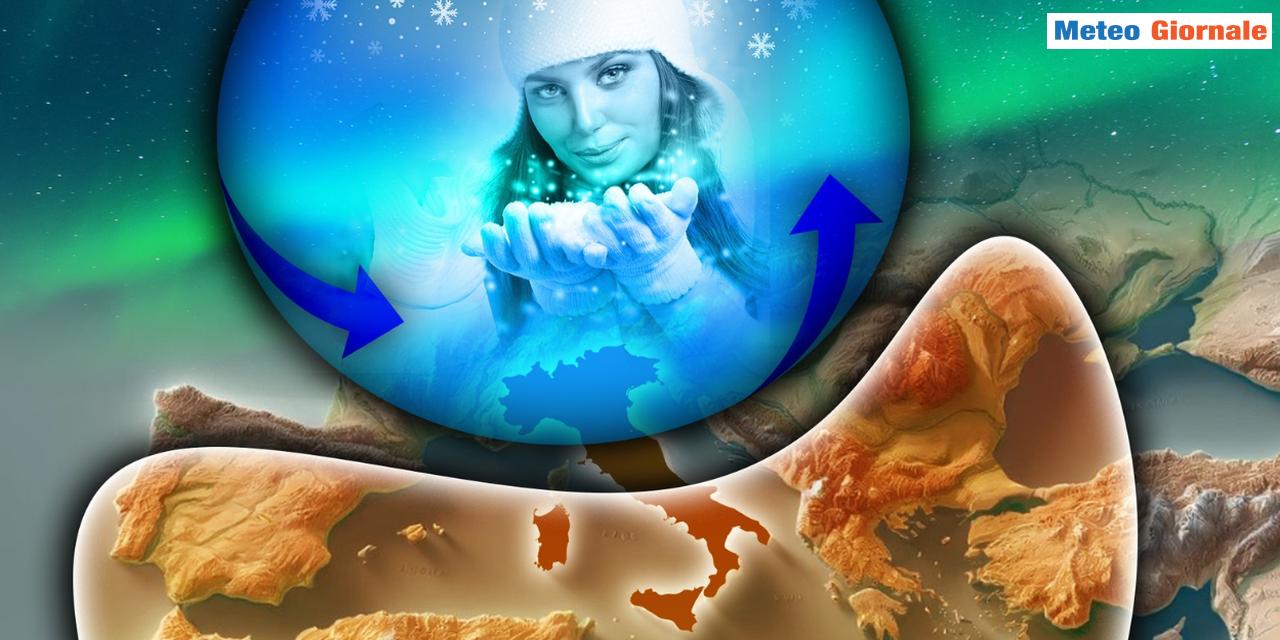
One of the most problematic phenomena is the jet stream, a high-altitude air flow that influences the climate of temperate areas.
With the increase in polar temperatures, the jet stream has become less stable, causing extreme weather phenomena in terms of both heat and cold.
This makes it complicated for meteorologists to accurately predict where and when exceptional weather events will strike.
Advanced technologies, but concrete limits
Despite advances in detection and modeling technologies, such as next-generation weather satellites and supercomputers dedicated to atmospheric simulation, weather forecasts still have to contend with many unknown factors. The margin of error increases especially when it comes to long-term forecasts.
In fact, it is scientifically proven that beyond four days, the accuracy of weather forecasts decreases drastically.
This does not mean that meteorologists are “unprepared,” but that the very nature of the climate has become more volatile.
The combination of a rapidly changing climate and the complexity of local atmospheric dynamics makes every forecast a challenge.
Moreover, local climate fluctuations are often difficult to predict even with the best technologies.
Phenomena such as “urban heat islands” or microclimates can significantly alter local forecasts, making it impossible to achieve precision on a very small scale.
The impact of inaccurate forecasts on daily life
Weather forecasts are not just about organizing daily activities, such as planning a trip or deciding what to wear, but have significant repercussions on key economic sectors such as agriculture, water resource management, and transportation.
Agricultural businesses, for example, depend on accurate forecasts to optimize planting and harvesting and to prevent damage related to unexpected storms or frosts.
When forecasts are less accurate, also due to the erratic climate, uncertainty spills over into people’s lives.
Not only that, but frequent weather alerts for phenomena that may not occur or be less intense than expected contribute to the so-called “alarm fatigue.” People, receiving too many alerts, tend to ignore them, exposing themselves to real risks when truly dangerous situations occur.
The future of weather forecasting
Scientists and meteorologists are trying to address these new challenges through improvements in mathematical models and the integration of new data.
For example, efforts are being made to include the dynamics of climate change in forecasting models to more accurately predict the intensification of extreme phenomena.
However, the margin of uncertainty will always remain an inevitable part of meteorology, especially in a context where the global climate is continuously evolving.
Future forecasts are not just about the short term but also about how to adapt to a world where climate change will continue to make the weather increasingly unpredictable.
Being prepared means not only improving forecasting technologies but also adapting infrastructure and risk management policies to cope with a climate that, more than anything else, has taught us not to take anything for granted.
 Follow our feed