As the Epiphany approaches, the evolution of weather conditions in Italy appears complex and dynamic, characterized by the interaction between different atmospheric configurations on a European and global scale.
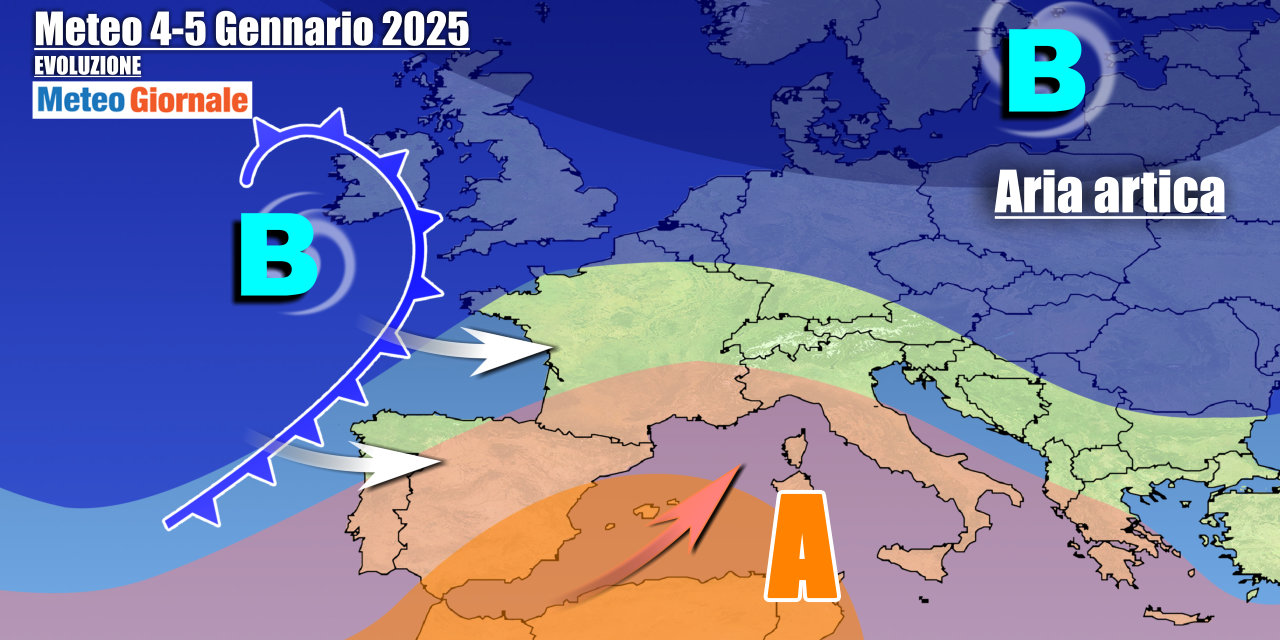
The current scenario is dominated by stable high pressure, ensuring clear skies and mild temperatures, especially in the Center-South and along the coasts. However, mathematical models suggest that this situation could undergo changes in the coming days, with the possibility of cold air incursions from Northern Europe or Eastern Europe.
These cold air influxes could lead to a drop in temperatures, especially in Northern Italy and inland areas, with the risk of snowfall at relatively low altitudes during the night hours. During the first week of January, the weather pattern over Italy could be further influenced by the arrival of disturbed currents of Atlantic origin, which would favor an increase in precipitation.
The Center-North regions and the Tyrrhenian areas would be the most affected, with widespread rain and local thunderstorms.
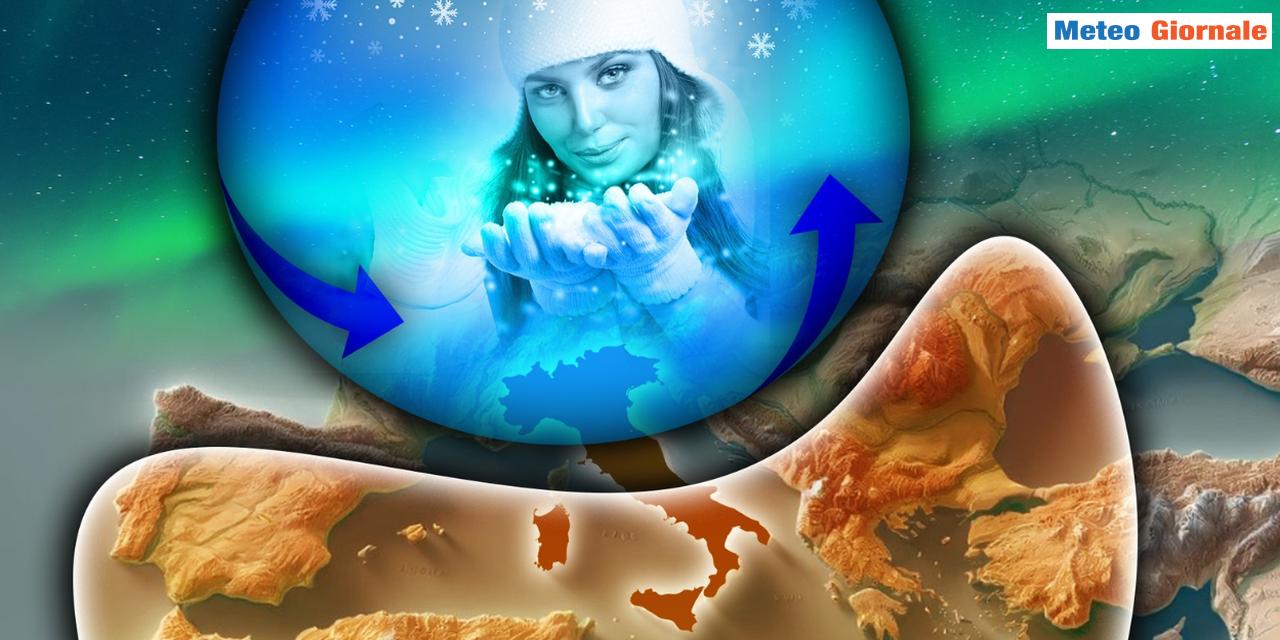
However, the possibility of a more intense cold outbreak, of Arctic or Arctic-continental origin, which could increase the risk of low-altitude snowfall, especially in the northern and central regions, cannot be ruled out.
In Southern Italy and the Major Islands, however, the climate would generally be milder, but with a higher probability of precipitation. From a thermal point of view, temperatures in Italy could show diversified trends between the various geographical areas.
The northern regions and inland areas could experience values below seasonal averages, particularly during phases characterized by cold air incursions.
The coastal areas of Central Italy, Southern Italy, and the Major Islands, on the other hand, could maintain higher temperatures, thanks to the influence of milder air masses linked to high pressure. With the passing of the Epiphany holidays, long-term weather trends outline a rather variable January.
In particular, the current La Niña phase, a global climatic phenomenon, could favor a cooling of the Euro-Asian areas, increasing the probability of cold waves over Southern Europe and Italy.
A crucial factor will be the evolution of the polar vortex: its weakening could facilitate more frequent cold descents towards the Mediterranean, with an increased risk of snowfall even at low altitudes.
Conversely, a compact polar vortex would favor greater atmospheric stability, with a prevalence of high pressure and milder weather, especially in the central-southern regions. This winter period is characterized by an alternation between episodes of bad weather, with widespread precipitation and intense winds, and moments of greater atmospheric tranquility.
The most significant precipitation could affect the Tyrrhenian regions, Northern Italy, and the Alpine arc, while the Adriatic and southern areas could experience more localized phenomena.
The second part of January remains uncertain, but current signals suggest a possible intensification of winter dynamics, with an increase in the probability of snowy events, even at low altitudes.
 Follow our feed