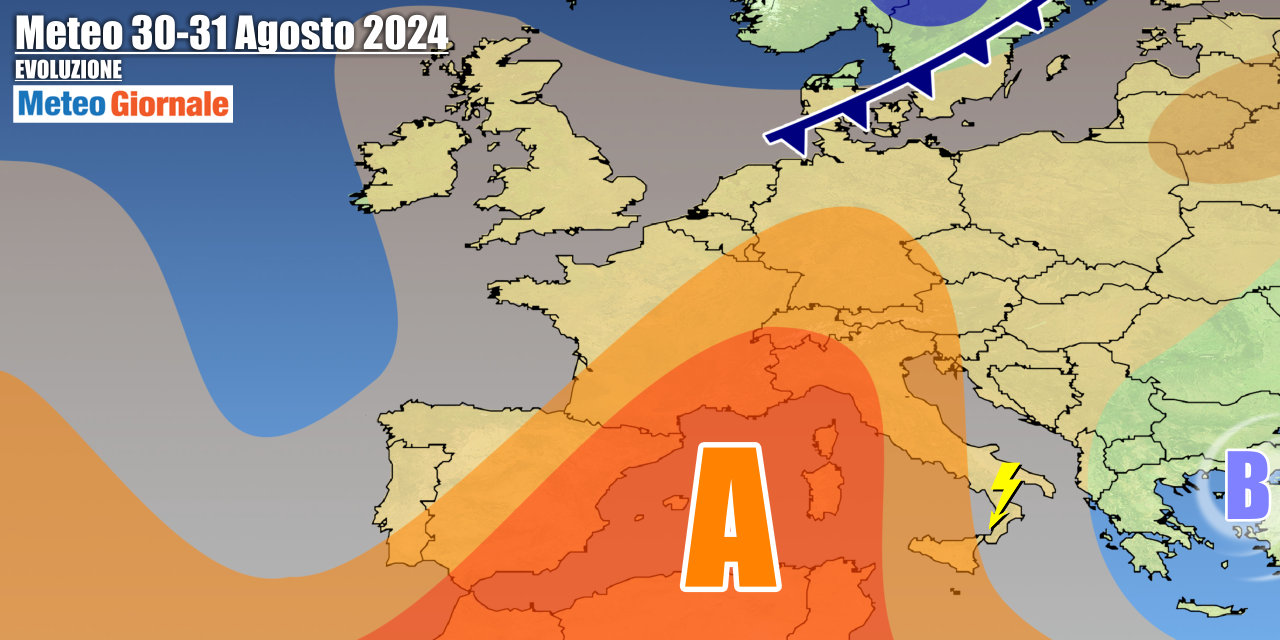
The extreme weather at the end of summer in Italy manifests in various and often contrasting ways, reflecting the country’s complex geography and variable climate. Increasingly typical phenomena are the intense and prolonged heat waves of August and even part of September. These periods of extreme heat, often associated with the African anticyclone, can lead to record temperatures for the period, especially in the central-southern regions and the islands.
The sultriness and high humidity can make conditions particularly difficult to bear, increasing the risk of wildfires and health problems. 


 A weather event not to be underestimated is violent thunderstorms, downpours, and hailstorms.
In fact, the thermal contrasts between the hot and humid air and the cooler currents at altitude can trigger intense thunderstorms, characterized by strong gusts of wind, large hail, and torrential rains.
These phenomena can cause flooding, landslides, crop damage, and power outages.
A situation we are increasingly observing in the North, such as on Sunday the 25th, when it affected half of France. Tornadoes and waterspouts: although not frequent, these extreme phenomena can occur, especially in the coastal regions and the plains of the North.
However, in autumn there are no precise boundaries, and September is a favorable month for these events.
They can cause significant damage to buildings, infrastructure, and vegetation.
Less dangerous but scenic are the numerous waterspouts observed at sea.
These phenomena are true tornadoes but form over water.
Sometimes, however, they can reach the coast and dissipate.
They can be very risky if they hit small boats. Flash floods: the rains of early meteorological autumn, falling with considerable intensity and concentrated in a short period, can cause flash floods, especially in mountainous and hilly areas.
Watercourses can swell rapidly, sweeping away everything in their path.
When a flash flood hits an urban center, the consequences can be significant, even very serious. Extreme weather can cause casualties, injuries, and damage to buildings, infrastructure, crops, and vehicles.
Service interruptions can occur.
Heavy rains, wind, and hail can cause power outages, transportation problems, and communication difficulties. Not to be overlooked is the impact on agriculture and the environment.
Extreme and out-of-season heat, drought persisting when rains should return, hailstorms, and, not least, floods can damage crops, reduce agricultural production, and have a negative impact on the environment. Out-of-season heat waves, as they are now in September, can cause heat stress, dehydration, heat strokes, and other health problems, especially in the elderly, children, and people with chronic conditions.
However, heat strokes know no age, and as we have written countless times, national laws are needed to regulate work conditions during such weather events. September in Italy can be a particularly prone month to extreme weather events due to a combination of factors.
During the summer, the Mediterranean Sea accumulates a large amount of heat.
In September, the waters are still very warm, providing energy and moisture to the atmosphere.
This situation favors the formation of intense thunderstorms.
In September, the warm and humid air from the Mediterranean can clash with cooler currents from Northern Europe. These thermal contrasts increase atmospheric instability, raising the risk of violent thunderstorms and extreme phenomena such as sporadic tornadoes. In some years, the African anticyclone can persist even in September, bringing intense and prolonged heat waves, especially in the central-southern regions and the islands.
However, this event is increasingly expanding towards the North, involving Northern Italy.
These conditions can favor the formation of wildfires.
Let’s not forget that in September there should be moderate temperatures, schools start, and in Italy buildings are not suitable to withstand heat waves, which already in June create discomfort for those who frequent them. In short, the combination of an exceptionally warm Mediterranean, strong thermal contrasts, and the possible persistence of the African anticyclone create a particularly unstable atmospheric environment in September in Italy. This instability can lead to a variety of extreme weather events, with significant impacts on the weather.
 Follow our feed