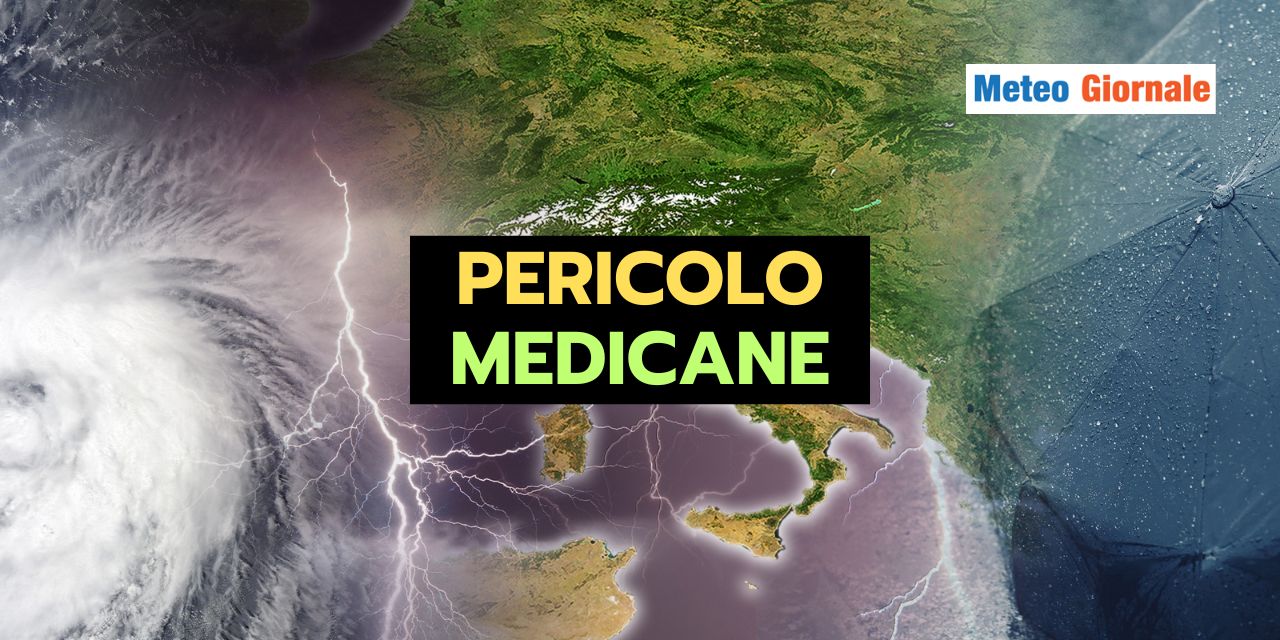
 The Mediterranean is undergoing a significant transformation in its weather, with an increase in extreme cyclonic phenomena known as Medicanes.
These cyclones, which exhibit characteristics similar to tropical cyclones, have caused destructive storm surges and coastal flooding in recent years, sometimes with fatal outcomes. Scientific attention towards these events is growing, partly due to their increasing frequency and intensity, especially in the autumn and winter months.
Complexity of Medicanes in the Mediterranean
The behavior of Medicanes in the Mediterranean is particularly complex due to the topography and interactions between air and sea in this region.
These cyclones are mainly divided into two categories: Medicanes, with a symmetrical structure and a warm core, and extra-tropical cyclones, characterized by asymmetry and a cold core. During autumn and winter, the weather in the Mediterranean favors the formation of Medicanes, thanks to the high sea surface temperatures (SSTs) that provide the necessary energy for their development.
Study on Sea Surface Temperatures
A recent study used satellite data and numerical reanalysis to examine SSTs in the Mediterranean, comparing them with direct observations from southeastern Sicily and Argo floating devices. An important finding of this study was the significant decrease in sea surface temperatures before the formation of a Medicane, a rare phenomenon in extra-tropical cyclones.
This type of thermal variation, identified through the use of continuous wavelet transform (CWT), is crucial for understanding the behavior of these cyclones.
The Role of Sea Surface Temperatures in Cyclone Development
Sea surface temperatures (SSTs) play a key role in the formation and intensification of Medicanes.
During autumn, when SSTs are high, intense surface fluxes and the release of latent heat occur, essential elements for the intensification of these cyclones. Seasonal variations in SSTs and the depth of the mixed layer (MLD) are determining factors for the formation of Medicanes, especially during the autumn and winter months.
Medicanes: More Frequent in Autumn and Winter
Despite higher temperatures in summer, Medicanes primarily develop in autumn and winter when the weather is more favorable.
A significant example is Medicane Ianos in 2020, which reached an intensity comparable to that of a Category 1 tropical cyclone according to the Saffir-Simpson scale.
This demonstrates that, despite higher SSTs in summer, autumn and winter offer the ideal weather for the development of these extreme events.
Importance of Understanding SST Variations
Understanding SST variations is fundamental to improving the forecasting capabilities of Medicanes and managing the emergencies associated with them.
These cyclones represent a unique phenomenon in the Mediterranean weather landscape, and their understanding is essential to mitigate the associated risks. The increase in the frequency and intensity of these events makes it increasingly necessary to pay greater attention to monitoring and accurate forecasting, especially in the most at-risk months such as autumn and winter.
 Follow our feed